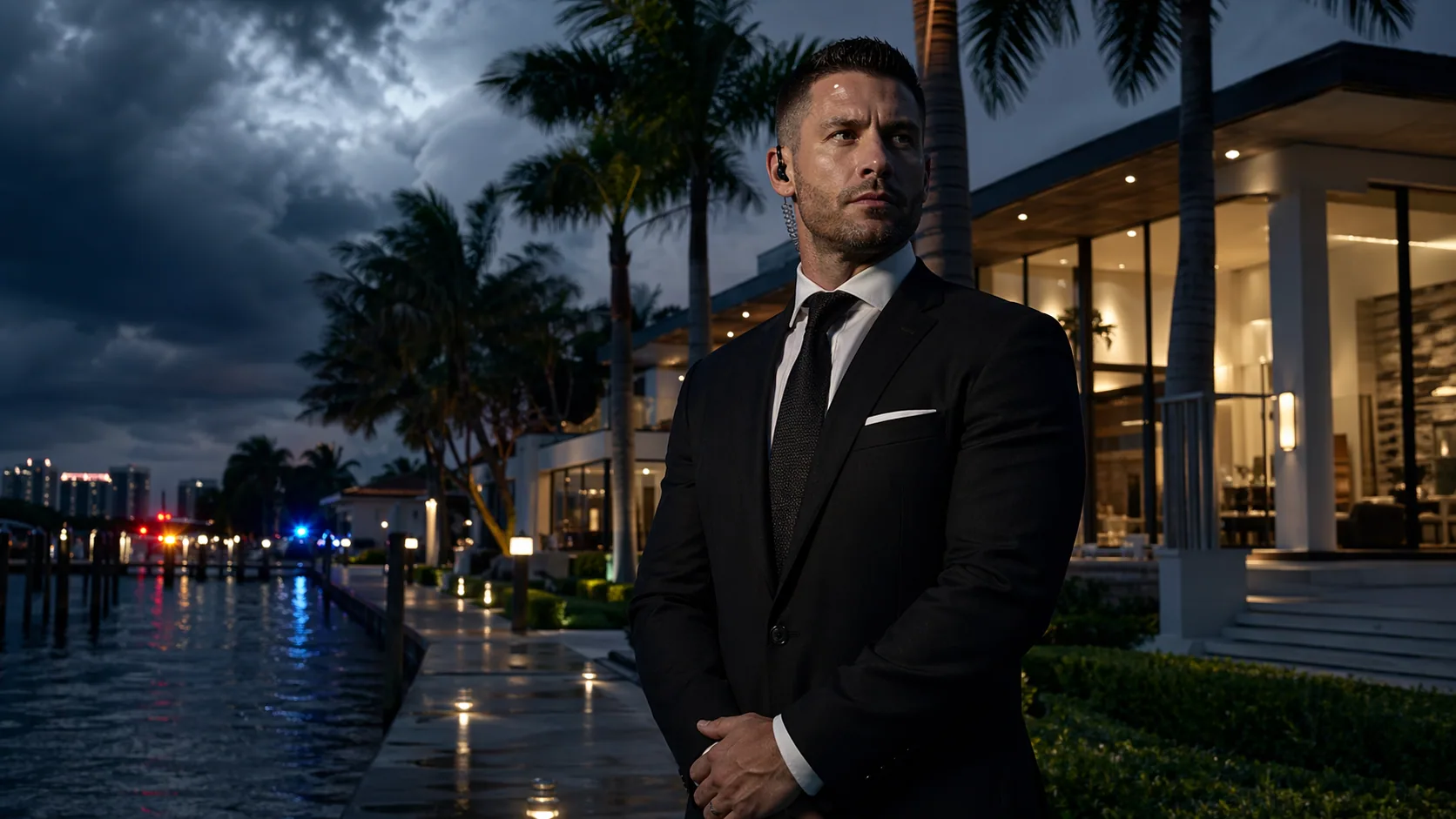
- A hurricane is a security event, not just a weather event.
- Power outages disable alarms and cameras, gates fail open, homes sit empty during evacuations, and fraudsters impersonate contractors, adjusters, and utility crews.
- Florida estates need a written storm security plan covering backup power for security systems, evacuation movement, post-storm access control, and a verified-vendor list, with protective coverage in place before landfall.
Table of Contents
Most hurricane plans in Florida are about the house: shutters, generators, sandbags, insurance. Few treat the storm as what it also is, a security event. For the hours and days around landfall, the normal layers that protect a residence fail at the same time. Power drops and takes the alarm, cameras, and gate with it. The family evacuates and the house sits empty. Law enforcement is focused on rescue, not patrol. And strangers in work vehicles become a normal sight on every street.
The Atlantic hurricane season runs from June 1 through November 30. This guide covers how high-net-worth families and family offices close those gaps, from Praetorian Executive Protection LLC, a Florida Class B licensed security agency (License B3600136) based in Cocoa, on the Space Coast.
Why is a hurricane a security problem and not just a weather problem?
Because every protective layer a residence depends on is degraded at once:
-
Technology fails. Alarms, cameras, smart locks, and motorized gates depend on power and internet. Many systems run on batteries sized for hours, not days.
-
Physical barriers fail. Fences, hedges, and gates are damaged or blown open. Doors and windows may be compromised.
-
The house is empty. Evacuation leaves high-value property unattended, sometimes for days, and everyone in the area knows it.
-
Response is slow. Police and fire resources are committed to life-safety calls. An alarm, if it even transmits, may not get a quick response.
-
Strangers are normal. Tree crews, roofers, adjusters, and utility workers are everywhere. Criminals blend in easily.
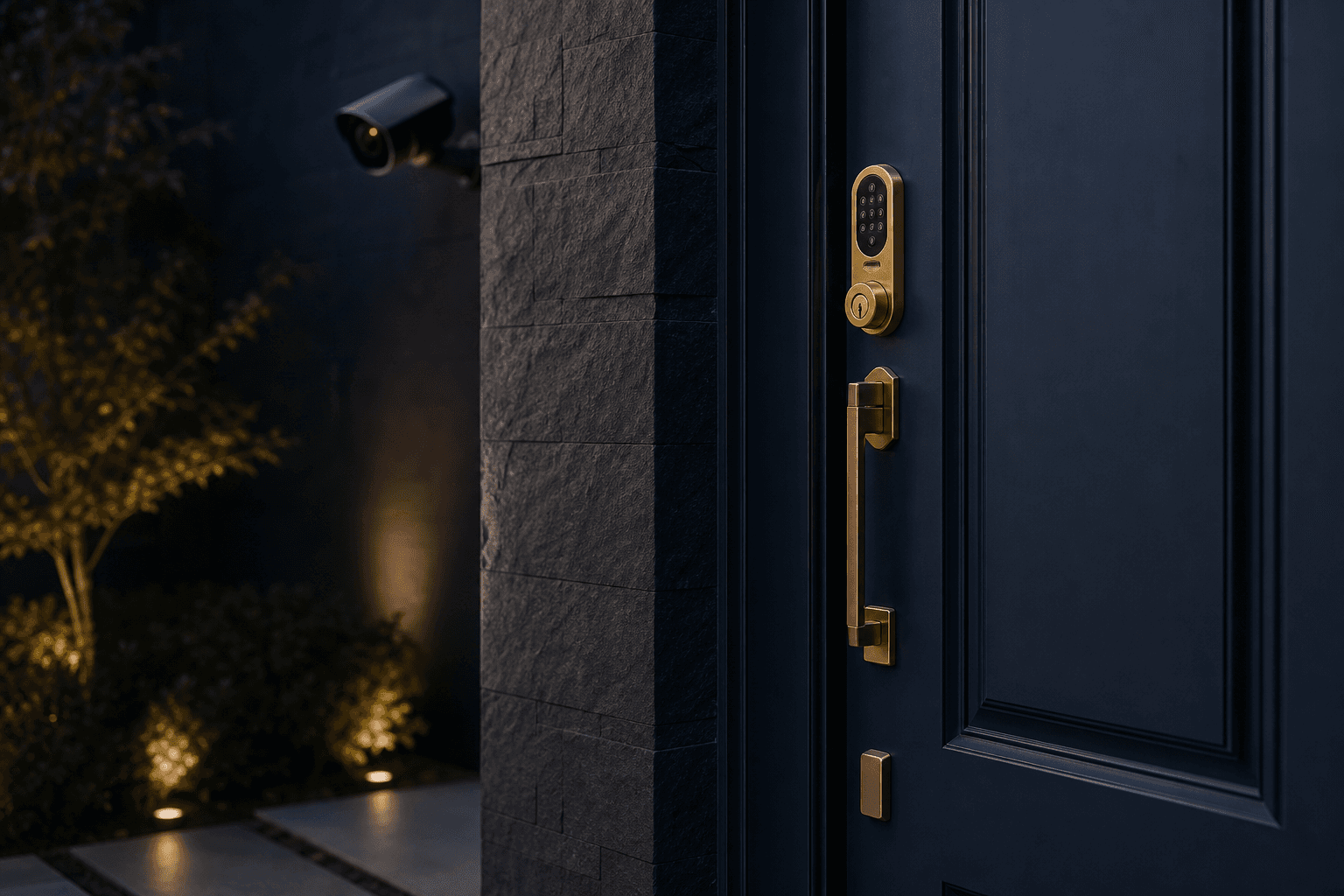
What are the biggest security risks after a hurricane?
1. Burglary of evacuated homes. Empty, dark homes with dead alarms are the obvious target. High-end neighborhoods that empty out under evacuation orders are attractive because the potential payoff is high and the chance of being seen is low.
2. Impersonation and contractor fraud. People posing as utility crews, insurance adjusters, government inspectors, or contractors use the uniform and the work vehicle to get onto a property, assess it, or take a deposit for work that never happens.
3. Targeting during movement. Evacuation creates predictable movement: packed vehicles, known routes, crowded fuel stops, and hotels full of displaced families. For a principal with a public profile, that predictability is a risk of its own.
4. Staff and access exposure. Household staff, property managers, and vendors all know the evacuation plan. Access codes are shared widely for emergency repairs and rarely changed afterward.
How should a Florida estate prepare before hurricane season?
Preparation is the part most families skip, and the part that matters most. Before June 1:
Pre-Season Storm Security Plan
Power the Security Stack
Battery backup and generator circuits for alarm panels, cameras, network gear, and gate controls, plus a cellular or satellite alarm communicator.
Build a Verified-Vendor List
Pre-vetted roofers, tree services, restoration companies, and adjuster contacts, with phone numbers you already trust.
Write the Movement Plan
Evacuation triggers, primary and alternate routes, destinations, and who travels with the family.
Control Access
Know who holds codes and keys, and plan to change them after the storm.
A professional residential security assessment should cover storm scenarios explicitly: what fails when the power goes out, how long the backups last, where the property is physically vulnerable after wind damage, and who will verify the property's condition after the storm.
What should happen when a storm enters the forecast cone?
Once a storm threatens your area, the plan shifts from preparation to execution:
-
Confirm protective coverage early. Qualified security teams are committed quickly once a storm is forecast. Book hurricane protection and evacuation security before landfall, not after.
-
Secure and document the property. Photograph and video every room and exterior before you leave. Secure valuables, documents, and firearms in a safe or take them with you.
-
Test the security systems on backup power. Confirm the alarm communicator, cameras, and remote access work with utility power cut.
-
Limit who knows the plan. Share the evacuation timing and destination only with the people who need it.
-
Follow official orders. No security professional should remain in an evacuation zone during the storm. The goal is to protect people first and restore security to the property the moment it is safe to return.
For principals traveling during an evacuation, secure transportation and travel security turns a chaotic, predictable movement into a planned one: route selection, fuel and lodging planning, and a protective presence at stops and hotels.
How do you secure a residence after the storm passes?
The first 72 hours after the storm are the highest-risk window for the property itself:
-
Re-establish a physical presence. As soon as authorities allow, have a trusted, licensed professional verify the property, document damage, and maintain presence until the alarm, cameras, and gates are restored.
-
Control every visitor. Nobody enters based on a uniform, a vehicle, or a clipboard. Verify each visit by calling the company back on a number from your own list, not one they give you.
-
Check contractor licenses. Verify any contractor's Florida license through the Department of Business and Professional Regulation before they start work or take a deposit.
-
Change codes and keys. Anyone given emergency access during the storm keeps that access until you change it.
-
Watch for follow-up fraud. Storm-related phishing emails, fake invoices, and requests to change payment details are common after a disaster. Confirm any payment change by phone.
- Treat every hurricane as a security event as well as a weather event
- Put alarms, cameras, network, and gates on backup power with a cellular communicator
- Keep a verified-vendor list and verify every visitor by calling back
- Book protective coverage before landfall, not after
- Change access codes and keys once the storm has passed
How does protective intelligence help during hurricane season?
Protective intelligence gives families a clear operational picture when information is chaotic: road and bridge closures, curfews, fuel availability, the status of the property, and emerging local threats such as reported looting or fraud schemes in the area. Decisions about when to leave, where to go, and when to return are better made with verified information than with social media.
Founder Christopher Smith brings 30+ years across the United States Marine Corps, law enforcement, and corporate executive protection, including operating as the site security lead for the executive personal security detail for Jeff Bezos and the Amazon Board of Directors at Kennedy Space Center. On the Space Coast, storm planning is simply part of operating in Florida.
Related Protection Services
Hurricane Protection and Evacuation Security
Praetorian's storm-season service: pre-storm assessment, evacuation movement, and post-storm property security.
Residential and Family Protection
Security assessments and protective coverage for Florida residences and families.
Emergency Response
Rapid protective response when circumstances change quickly.
Space Coast Protection
Executive and residential protection across Brevard County and the Space Coast.
Miami Protection
Executive and residential protection across South Florida.
Frequently Asked Questions
The Atlantic hurricane season runs from June 1 through November 30 each year. Storm security planning should be complete before June, with the plan reviewed again whenever a storm enters the forecast cone.
Storms create opportunity. Alarms and cameras lose power, gates and fences are damaged, homes are left empty during evacuation, and residents are waiting for help from contractors and insurers they have never met. Criminals exploit all of those gaps, including by impersonating utility crews, adjusters, and contractors.
Not during the storm itself. No one should remain in an evacuation zone against official orders. A professional plan secures the property before the storm, protects the family during evacuation, and re-establishes security at the residence as soon as it is safe and legal to return.
Put alarm panels, cameras, network equipment, and gate controls on battery backup sized for extended outages, connect them to a properly installed standby generator, and use a cellular or satellite alarm communicator so monitoring continues when internet and phone lines go down.
Build a verified-vendor list before the season starts, verify any contractor's Florida license with the DBPR, never let anyone onto the property based on a uniform or a vehicle alone, and confirm every visit by calling the company back on a number you already have.
Yes. Praetorian provides pre-storm residential security assessments, protective coverage for family evacuation and relocation, and post-storm residential security across Florida, including the Space Coast, Central Florida, and South Florida.
Hurricane season ends November 30, and the time to plan for next season is before it starts. Learn about Praetorian's hurricane protection and evacuation security, or schedule a confidential consultation to build a storm security plan for your residence and family.
Author: Christopher Smith, Founder, Praetorian Executive Protection. USMC combat veteran (1999 to 2012), state law enforcement including DEA T3 task forces, and site security lead for Jeff Bezos and the Amazon Board of Directors at Kennedy Space Center.