Skip to content
Praetorian Executive Protection
Resources

Executive Protection Glossary

Plain-language definitions of the terms used in modern executive protection. Each entry includes a dictionary-style definition and a note on how Praetorian Executive Protection applies the term in real engagements. Written by a 30+ year practitioner across military, law enforcement, and corporate executive protection.

High-Net-Worth Individual

Also: HNW / HNWI / VHNW / UHNW

High-net-worth individual (HNW or HNWI) is a financial industry term for a person with significant investable assets, typically defined as $1 million or more in liquid financial holdings excluding their primary residence. Very high-net-worth (VHNW) refers to individuals with $5 million or more, and ultra high-net-worth (UHNW) refers to individuals with $30 million or more. The categories are used by private banking, family offices, and protective services to scope the level of personalized service required.

How Praetorian Uses It

Praetorian's client base is heavily concentrated in HNW, VHNW, and UHNW individuals and families. The wealth tier matters less than the exposure profile. A UHNW family with low public visibility may need lighter coverage than a HNW executive who is publicly identified with a controversial company. Engagements are scoped to the actual threat picture, not to a wealth bracket.
Principal

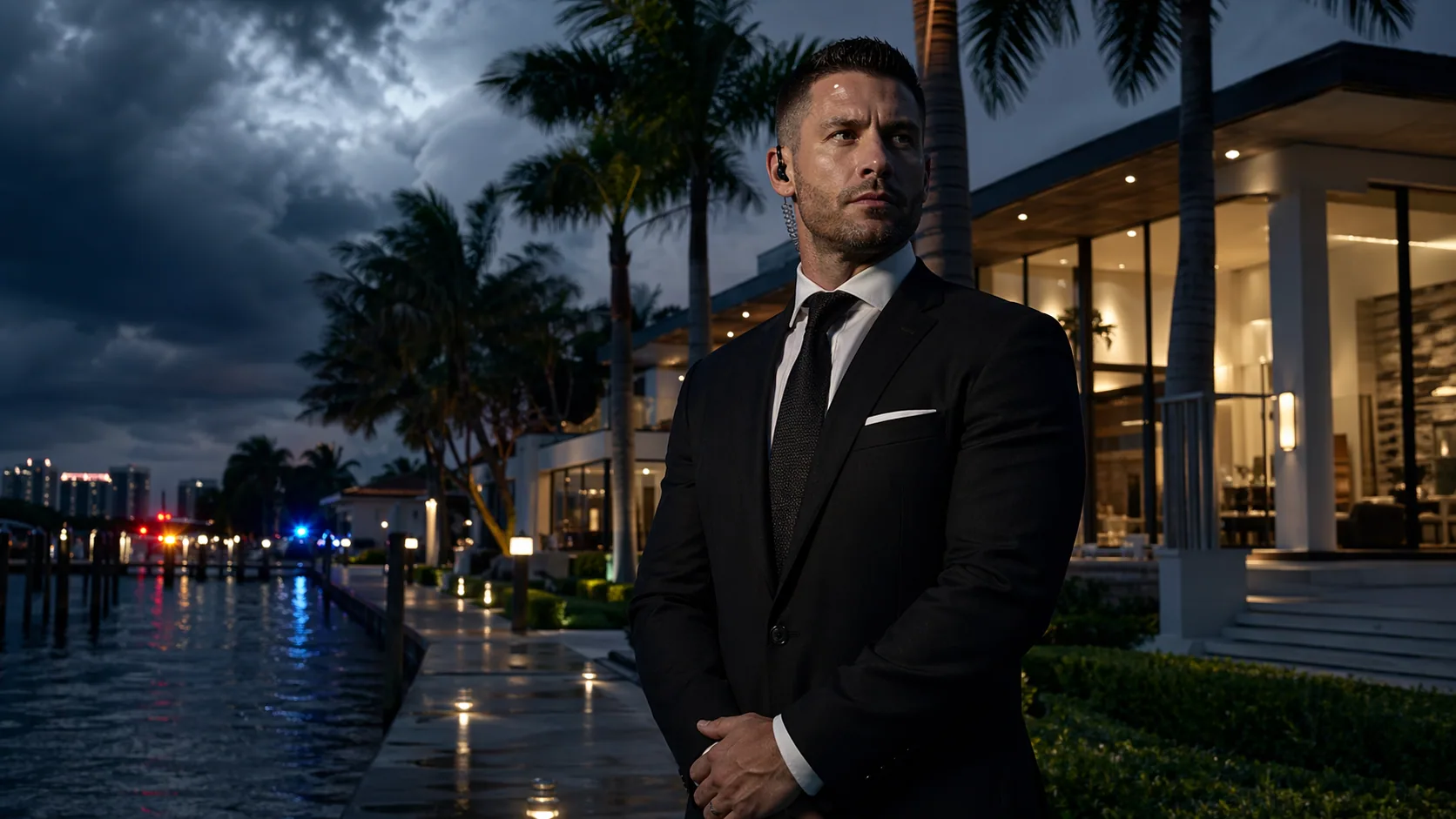
The principal is the individual a protection detail is assigned to keep safe. The term is used across executive protection, military, and diplomatic security contexts to refer to the protected person, regardless of their role, title, or threat profile.

How Praetorian Uses It

Every Praetorian engagement is built around the principal, not a package. The first conversation is about who the principal is, how they live, where they move, and what their actual exposure looks like. Plans are built from that, not from a template.

Detail

A detail is the team of operators assigned to protect a principal during a specific operation, event, or period. A detail can be one operator or many, depending on the threat profile, environment, and movement plan.

How Praetorian Uses It

Praetorian sizes each detail to the principal and the assignment. Some engagements run with a single low-profile operator. Others require a full team across advance, residence, transportation, and event coverage. The right size is the size that fits the work, not the one that bills the most hours.

Advance Work

Also: Advance

Advance work is the planning and reconnaissance done before a principal arrives at a venue or location. It includes route surveys, venue walks, identification of safe rooms and exits, coordination with venue security, and confirmation of arrival, departure, and contingency plans.

How Praetorian Uses It

The majority of executive protection work is done before anything ever goes wrong. Praetorian builds advance work into every engagement, even short ones. It is the difference between a detail that protects and one that just shows up.

Personal Security Detail

Also: PSD

A personal security detail (PSD) is a team of trained operators dedicated to protecting a single individual or small group on a continuous or assignment-specific basis. PSDs are common in military, diplomatic, and high-net-worth executive protection contexts.

How Praetorian Uses It

Christopher Smith led the site security work for the executive personal security detail for Jeff Bezos and the Amazon Board of Directors at Kennedy Space Center. PSD-level work is in Praetorian's operational DNA, and it shapes how every smaller engagement is planned.

Executive Protection

Also: EP

Executive protection is the discipline of protecting high-profile, high-net-worth, or high-risk individuals from physical, reputational, and operational threats. It combines close protection, protective intelligence, advance work, and risk planning into an integrated program tailored to the principal's life and exposure.

How Praetorian Uses It

Praetorian operates in the space between visibility and invisibility. Executive protection done right is not a presence, it is a system. Most clients never see the work that prevents the incident they never had.

Close Protection

Also: CP

Close protection is the on-the-body protective coverage of a principal. It refers specifically to the operators positioned closest to the principal, responsible for direct intervention if a threat materializes. Close protection is one component of a complete executive protection program.

How Praetorian Uses It

Praetorian close protection is discreet. Operators are in business attire, blend into the environment, and stay close enough to act without drawing attention to the principal. The work is designed to be invisible to everyone except the people being protected.

Soft Skills

In executive protection, soft skills are the interpersonal, observational, and judgment-based capabilities that determine how effectively an operator works with principals, families, staff, and the public. They include communication, situational awareness, etiquette, body language reading, and conflict de-escalation.

How Praetorian Uses It

Soft skills are the difference between a real EP operator and a bouncer. Praetorian operators are selected for judgment first. Anyone can be taught a movement drill. Reading a room is harder, and it matters more.

Hard Skills

Hard skills in executive protection are the technical, physical, and tactical capabilities required to operate in a protective role. They include firearms proficiency, defensive driving, first aid and trauma care, defensive tactics, and equipment handling.

How Praetorian Uses It

Hard skills are non-negotiable but they are not the differentiator. Praetorian operators meet a hard-skill baseline as a condition of employment. The work that earns the engagement is built on top of that baseline, not because of it.

Surveillance Detection

Also: SD

Surveillance detection is the practice of identifying whether a principal, location, or movement is being observed, followed, or studied by a hostile party. It is a proactive discipline that uses route variation, observation drills, and pattern recognition to spot indicators of surveillance before an attack is launched.

How Praetorian Uses It

Praetorian builds surveillance detection into every meaningful engagement. The work is invisible to the principal and to anyone observing. By the time a threat is obvious, the window for prevention has usually already closed.

Counter-Surveillance

Also: CS

Counter-surveillance is the active discipline of detecting, deterring, and disrupting hostile surveillance of a principal or facility. It overlaps with surveillance detection but focuses on engaging the surveillance once it has been identified, including identifying the operatives, their methods, and their objective.

How Praetorian Uses It

Counter-surveillance is part of how Praetorian thinks about every elevated-risk engagement. It is intelligence work as much as physical work, and it pairs with protective intelligence to give a principal a picture of who, if anyone, is paying attention.

Protective Intelligence

Also: PI

Protective intelligence is the discipline of identifying, analyzing, and mitigating threats to a principal before they materialize. It combines open-source intelligence, behavioral analysis, social media monitoring, and pattern recognition to spot risk indicators that traditional reactive security misses.

How Praetorian Uses It

Every Praetorian engagement begins with a protective intelligence assessment. Christopher Smith built protective intelligence work into the security operations supporting the executive personal security detail for Jeff Bezos and the Amazon Board of Directors at Kennedy Space Center. The same discipline now informs every Praetorian client engagement.

Threat Assessment

A threat assessment is a structured analysis of the people, groups, environments, and circumstances that pose risk to a principal, organization, or facility. It considers the credibility, capability, and intent of potential threats and produces a prioritized picture of what protection has to address.

How Praetorian Uses It

Praetorian does not propose protection without a threat assessment first. The assessment sets the scope of the engagement, the size of the detail, and the specific tactics that will be used. Protection without assessment is just expense.

Vulnerability Assessment

A vulnerability assessment evaluates the weaknesses in a principal's environment, routine, residence, and movement that an adversary could exploit. It is the inward-facing counterpart to a threat assessment and identifies what needs to be hardened, changed, or covered.

How Praetorian Uses It

Praetorian's residential and family engagements typically begin with a vulnerability assessment. We walk the property, review the routine, and identify the actual exposure points before designing the protective response. The assessment is the plan.

Lioness Program

A Lioness Program is a protective program staffed by female protection specialists, designed for female principals and gender-specific assignments. Female specialists can access environments and conversations male operators cannot, and they often provide a level of comfort and discretion that the assignment requires.

How Praetorian Uses It

Praetorian's Lioness Program staffs female protection specialists for female principals, family details, and engagements where gender access matters. The program is part of how Praetorian handles assignments that male-only details cannot effectively cover.

Clandestine Operation

A clandestine operation is a protective engagement conducted with deliberate concealment of the operator's role, presence, or affiliation. The principal is protected without anyone outside the engagement recognizing that protection is in place. Clandestine work is used when visible security would compromise the principal's privacy, business, or safety.

How Praetorian Uses It

Praetorian's clandestine operations are run by operators who can blend completely into the environment. The work is reserved for engagements where visibility itself is a threat. Clients who need this kind of work usually know it.

Site Survey

A site survey is the on-location reconnaissance of a venue, residence, or location the principal will visit or occupy. It documents access points, sight lines, choke points, safe rooms, exits, communication coverage, and coordination requirements with venue security or staff.

How Praetorian Uses It

Site surveys are part of Praetorian's standard advance work. Every venue the principal will visit is walked before arrival when the engagement allows. Surprises during a movement are usually a sign that the survey did not happen.

Route Survey

A route survey is the planning and reconnaissance of the routes a principal will travel between locations. It identifies primary and alternate routes, choke points, traffic patterns, escape options, and coordination with local law enforcement or venue security where required.

How Praetorian Uses It

On the Florida Space Coast, route surveys account for causeways, launch road closures, hurricane evacuation routes, and barrier-island geography. Local route knowledge is one of the reasons Praetorian operates from inside the markets it protects.

IFAK

Also: Individual First Aid Kit

An IFAK is a compact medical kit designed to treat the most common life-threatening injuries until professional medical help arrives. It typically includes a tourniquet, hemostatic gauze, pressure bandages, chest seals, and basic airway tools. Every trained operator carries one.

How Praetorian Uses It

Praetorian operators carry IFAKs as a baseline. Trauma care training is part of the standard. The job is to keep the principal alive long enough to reach definitive care, and that is a skill set that has to be in place before it is needed.

Verbal Judo

Verbal judo is a tactical communication discipline that uses language, tone, and de-escalation techniques to defuse confrontations before they become physical. The framework is widely used in law enforcement and protective work.

How Praetorian Uses It

Most confrontations Praetorian operators encounter never become physical, and they never become physical because the operator handled the interaction with verbal control. Talking a situation down is the first option, every time.

Body Language Reading

Body language reading is the practiced skill of identifying intent, stress, deception, and pre-attack indicators through observation of posture, movement, eye behavior, and micro-expressions. It is a core observational skill in executive protection and behavioral threat assessment.

How Praetorian Uses It

Praetorian operators are selected for observational ability. Reading a crowd, a doorway, or a single person walking toward the principal is the kind of judgment that prevents incidents the principal will never know about.

Crowd Management

Crowd management in executive protection is the discipline of moving a principal through, near, or around groups of people while controlling exposure and maintaining intervention distance. It includes positioning, screening, and movement patterns adapted to crowd density and behavior.

How Praetorian Uses It

Praetorian operators move principals through crowds without making the principal look protected. The technique is positional, not theatrical. Done correctly, no one in the crowd notices the operator and no one notices the principal until it is too late to act.

Choke Point

A choke point is a physical location where movement is constrained, options are limited, and an adversary has an advantage. Examples include doorways, elevators, stairwells, narrow corridors, and bridges. Choke points are mapped in every site and route survey.

How Praetorian Uses It

Brevard County is full of choke points. Causeways, US-1 bridges, port terminals, and venue entries all qualify. Praetorian's local route planning is built around them. Knowing where the choke points are is the first step. Knowing how to time movement around them is the work.

Area of Responsibility

Also: AOR

Area of responsibility (AOR) is the physical or operational zone an operator or detail is assigned to cover during an engagement. AORs are defined to ensure overlapping coverage, clean handoffs, and accountability across a multi-operator detail.

How Praetorian Uses It

Even single-operator Praetorian engagements have a defined AOR. Knowing the boundaries of the work makes the operator more effective inside them, not less. Discipline about AOR is one of the differences between an organized detail and an improvised one.

Cover and Evacuation

Cover and evacuation is the protective response to an imminent or active threat. The operator places themselves between the principal and the threat (cover) and moves the principal to a pre-identified safe location (evacuation). The drill is rehearsed in advance and adapted to the environment.

How Praetorian Uses It

Praetorian rehearses cover and evacuation as part of advance work. The principal does not need to know the details, but the operators need to have the response cued before the threat appears. The first second of a real incident is not the time to think it through.

Hard Target / Soft Target

A hard target is a person, location, or facility that has visible, layered, and effective security in place. A soft target is one that does not. Adversaries select soft targets because they are easier to attack with lower risk. Effective executive protection moves a principal toward the hard-target end of the spectrum.

How Praetorian Uses It

Praetorian's job is to make the principal a harder target than the adversary is willing to engage. That usually does not look like visible security. It looks like routine variation, advance work, and protective intelligence the adversary cannot work around.

Low Profile

Low profile in executive protection refers to operators and operations that are designed not to draw attention. Operators in business attire, vehicles that blend with traffic, and movement patterns that look ordinary are all low-profile by design. The opposite is overt or high-visibility protection.

How Praetorian Uses It

Praetorian's default mode is low profile. The brand exists to provide protection that does not look like security. Most clients want to be protected, not to look protected. The work is built around that distinction.

Operational Security

Also: OPSEC

Operational security (OPSEC) is the practice of protecting information about an operation, principal, or organization from collection by adversaries. It includes controlling what is published, posted, discussed in public, and visible in routine patterns. OPSEC failures often cause incidents that protection alone cannot prevent.

How Praetorian Uses It

Praetorian works inside a strict OPSEC posture. We do not publish client names, post photos of operators, or discuss engagement details. The discretion is the product. OPSEC is also a coaching point for every client, because a principal's social media presence often exposes more than any protective gap.

Doxxing

Doxxing is the act of researching and publishing private information about an individual without consent, typically with hostile intent. Doxxing has become a primary attack vector against executives, public figures, and HNW individuals because of the volume of personal data available through public records, data brokers, and social media.

How Praetorian Uses It

Doxxing is one of the reasons protective intelligence and digital exposure assessment are part of Praetorian's standard offering. By the time a principal is doxxed, the physical protection plan has to assume the adversary has the principal's address, schedule, and family details. Plans built without that assumption fail.

Red Team

A red team is a group of trained personnel who simulate adversary behavior against a security plan, facility, or principal in order to identify weaknesses before a real adversary finds them. Red teaming is a structured way to test protection against the people who would actually try to defeat it.

How Praetorian Uses It

Praetorian thinks like a red team during planning. Christopher Smith's background includes building security operations from the ground up at sensitive facilities. Knowing how an adversary would approach a problem is the fastest way to figure out what the protection plan is missing.

Static Post

A static post is a fixed protective position assigned to cover a specific location, entry, or asset. Static posts complement mobile coverage and are common at residences, hotel rooms, and event venues. The operator's job at a static post is to control access and observe, not to move with the principal.

How Praetorian Uses It

Praetorian uses static posts where they actually add protection. A guard at the door is not the same as a static post that has a clear AOR, defined access protocols, and communication with the rest of the detail. The difference is whether the position is doing security work or just standing somewhere.

Motorcade

A motorcade is a coordinated convoy of vehicles used to move a principal between locations. Motorcades typically include an advance vehicle, a principal vehicle, and a follow vehicle, with additional support depending on threat profile. Motorcade movements are pre-planned and rehearsed.

How Praetorian Uses It

Praetorian uses motorcade structures only when the engagement requires them. Most HNW client work is single-vehicle and low-profile. When a motorcade is the right choice, it is planned and rehearsed, not improvised on the day.

Embus / Debus

Embus and debus are protective drills for moving a principal into and out of a vehicle. They cover positioning of operators, control of the door, observation of the surrounding environment, and the seconds of exposure when the principal is most vulnerable.

How Praetorian Uses It

The vehicle door is one of the most predictable points of exposure in any movement. Praetorian operators rehearse embus and debus drills as a standard part of training, and they execute them on every detail, even ones that look routine. Routine is exactly when complacency creates risk.

Personally Identifiable Information

Also: PII

Personally identifiable information (PII) is data that can be used to identify a specific person, including name, address, phone number, date of birth, financial details, and location data. In executive protection, PII exposure is a primary input to threat assessments because it determines how easy a principal is to target.

How Praetorian Uses It

Praetorian's protective intelligence work includes a review of the principal's PII exposure across public records, data brokers, social media, and corporate filings. The plan is built around what an adversary can already see, not what would be ideal if exposure were lower.

Pre-Operation Brief

Also: Pre-Op

A pre-operation brief is the structured meeting held before a detail begins, where operators review the principal, the threat assessment, the route, the venues, the contingencies, and the assignments. The brief ensures every operator on the detail has the same picture before the engagement starts.

How Praetorian Uses It

Praetorian runs a pre-operation brief before every meaningful engagement. The brief is short, structured, and covers what each operator needs to know to do the job. Skipping the brief is how avoidable mistakes get made on the actual movement.

After Action Review

Also: AAR

An after action review (AAR) is the structured debrief held after an operation or detail to identify what worked, what did not, and what should change for the next engagement. AARs are a core practice in military and law enforcement units and are equally valuable in private executive protection.

How Praetorian Uses It

Praetorian runs an after action review after every engagement that justifies one. The review is honest. It produces small changes that compound over time. Most of the operational improvements that matter come from AARs, not from training courses.

Bodyguard

Bodyguard is a colloquial term for a person hired to protect another individual from physical harm. In modern professional security, the term has largely been replaced by executive protection, close protection, or protective specialist, which describe the discipline more accurately and reflect the planning and intelligence work involved beyond physical presence.

How Praetorian Uses It

Praetorian operates as an executive protection firm, not a bodyguard service. The distinction matters. A bodyguard is presence. Executive protection is a system of advance work, intelligence, and coordinated movement that prevents the incident a bodyguard would have to react to. You don't just want to look protected. You want to be protected.

Get Started

Every Engagement Begins with a
Confidential Consultation

No questions asked. Secure results.

Available 24/7 for consultation requests.

Confidential Consultation