- Securing a corporate event requires advance work, access control, protective intelligence, and contingency planning.
- This checklist covers the critical steps from venue selection through post-event debrief, drawn from 30+ years of military, law enforcement, and corporate security experience.
Table of Contents
The December 2024 killing of a Fortune 500 CEO on a public sidewalk changed how corporate America thinks about event security. 42% of organizations now report significantly more emphasis on executive protection compared to 18 months ago. Corporate events, where executive presence is predictable and publicly announced, are high-priority targets for anyone who wants to cause harm.
This checklist is not theoretical. It is built from 30 years of military, law enforcement, and corporate security operations, including securing events at Kennedy Space Center for Amazon and Project Kuiper leadership.
What does pre-event intelligence require? (30+ days out)
Security planning starts long before anyone walks into a venue.
How do you conduct an effective threat assessment?
Evaluate the risk profile of the event itself. Who is attending? Are any attendees publicly controversial, politically exposed, or the subject of known threats? What industry are you in, and is that industry currently targeted?
Research the event location. Crime data for the area, recent incidents at or near the venue, and any concurrent events that could create crowd conflicts or draw protest activity.
Review open-source intelligence. Social media chatter about the event, about the company, and about key executives who will be present. If someone is planning to cause a disruption, the indicators are often visible weeks in advance.
How should security influence venue selection?
If you have a voice in venue selection, use it. From a security perspective, the best venues offer controlled access points (limited and manageable entry/exit), adequate parking separation from the event space, interior rooms without exterior windows for VIP holding areas, loading dock access for secure arrivals and departures, and existing camera infrastructure that your team can monitor or access.
In Florida, this matters more than in many states. Open-carry demonstrations, hurricane season logistics, and the sheer volume of tourism traffic around major cities (Orlando, Miami, Tampa) create variables that other markets do not.
Key Venue Security Criteria
Controlled Access
Limited, manageable entry and exit points that can be fully secured.
VIP Holding Areas
Interior rooms without exterior windows for secure staging.
Camera Infrastructure
Existing systems that your team can monitor in real time.
Loading Dock Access
Secure vehicle staging for arrivals and departures.
What does a proper venue advance involve? (14-7 days out)
How do you perform a physical venue advance?
Walk the venue. Not the virtual tour. Not the floor plan PDF. The physical site.
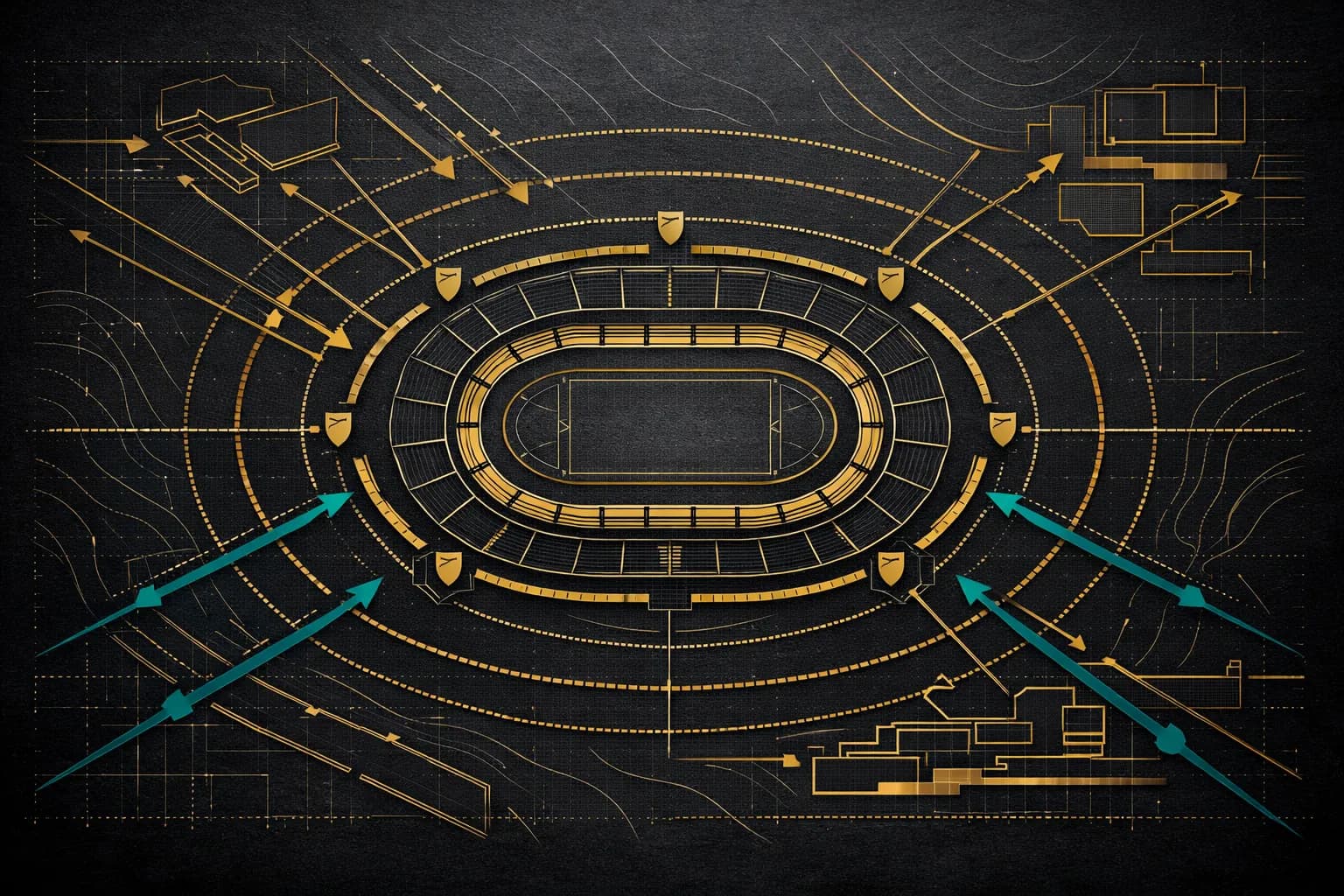
During the advance, document every entrance and exit, including service entrances, loading docks, and emergency exits. Map interior routes from the VIP arrival point to the event space and identify at least two alternate routes. Assess sight lines from surrounding buildings, parking structures, and public areas. Identify the nearest trauma center and the fastest route to reach it. Coordinate with venue security and local law enforcement.
If your event is in Miami, that means understanding the Brickell corridor's traffic patterns and the limited vehicle staging around most downtown hotels. In Orlando, it means accounting for convention center logistics and the congestion created by theme park traffic on surrounding roads. In Tampa, it means coordinating around port activity and the Channelside district.
How should access control and credentialing work?
Determine who gets in and how. For corporate events, this typically means tiered access: general attendees, VIP attendees, executive leadership, staff, and vendors. Each tier should have a distinct credential that is visually identifiable to security personnel without requiring close inspection.
Credential production and distribution should be controlled. No "will call" lists written on paper at the front door. Digital check-in with photo verification for VIP tiers. Pre-registration required for all attendees with identity verification at the point of entry.
Related Security Services
Why does a dedicated communication plan matter?
Establish a dedicated communication channel for the security team. Radio communication with designated channels, call signs, and pre-established code words for specific situations. The event organizer needs a single point of contact on the security team, not direct access to every operator.
What are the priorities on event day?
How do you secure arrivals and departures?
The most vulnerable moments at any event are arrivals and departures. Principals are transitioning between the vehicle and the venue, their location is predictable, and crowds tend to cluster near entrances.
For high-profile attendees, use a secure arrival sequence: advance team clears the entry point, the principal's vehicle arrives at a pre-staged position, the close protection team walks the principal from vehicle to holding area via a controlled route. Reverse the process for departure.
If multiple executives require secure arrivals, stagger the timing. Two principals arriving simultaneously doubles the complexity without doubling the resources.

How should security teams be positioned inside the venue?
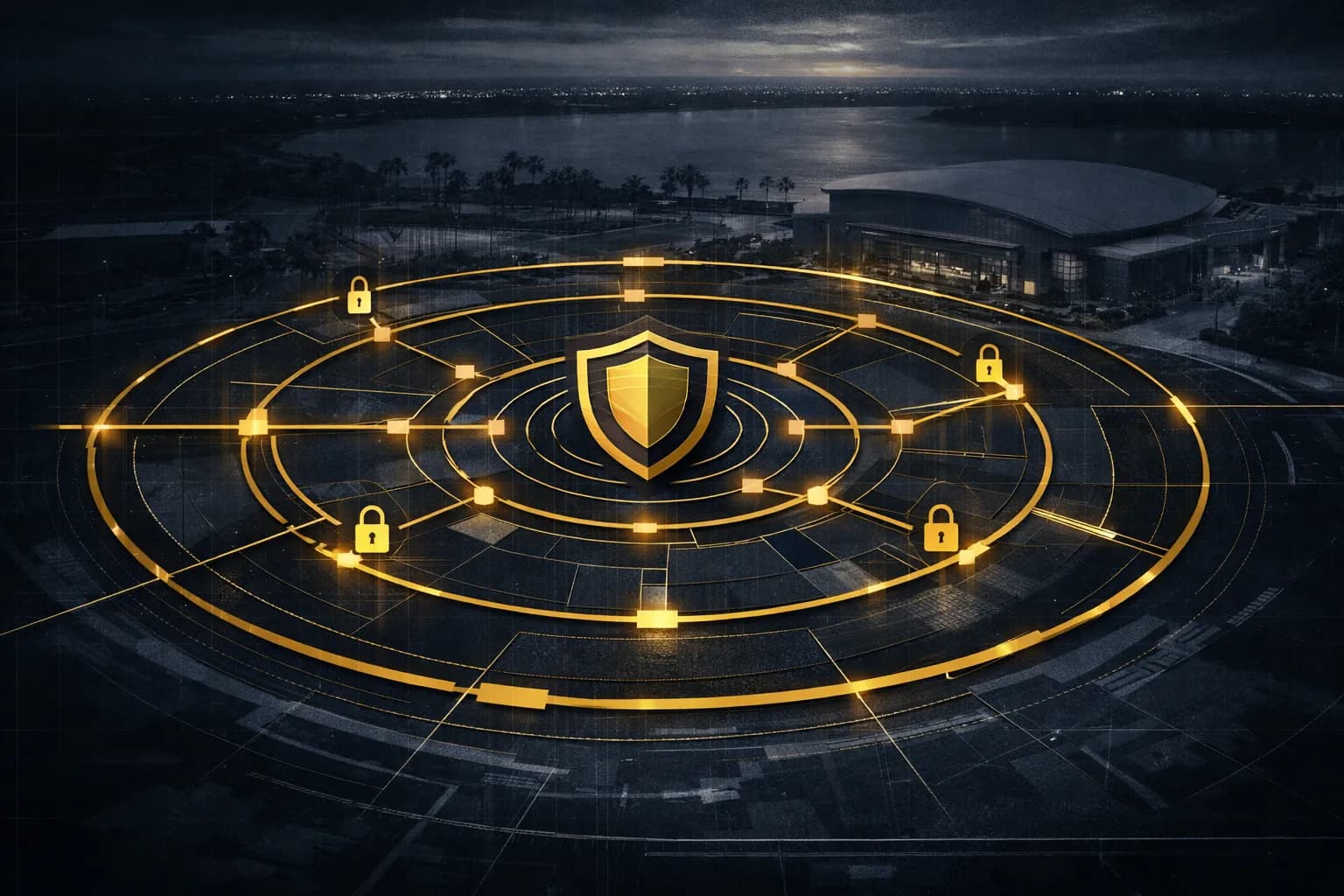
During the event, security positioning should be layered. Outer perimeter (parking, building exterior), inner perimeter (entry points, hallways), and close protection (the room itself, positioned near the principal). Each layer communicates with the others. If the outer perimeter identifies a developing situation, the inner layers adjust before it reaches the event space.
Event Security vs Dedicated Executive Protection
- +Venue-wide access control and crowd management
- +Efficient coverage of entire facility
- +Coordination with local law enforcement
- +Scalable staffing for different event sizes
- -Limited focus on specific high-profile individuals
- -Predictable principal locations during arrivals and departures
- -Shared resources across all attendees
- -Less flexibility for last-minute itinerary changes
What medical capabilities must be in place?
At least one team member should be medically trained and carrying a trauma kit. Know the location of the venue's AED. Have the address of the nearest Level 1 trauma center pre-loaded in navigation. If you are operating in a major Florida metro, identify which hospitals have dedicated trauma teams on duty versus which ones will transfer. Minutes matter.
- At least one team member must be medically trained with a trauma kit on hand
- Pre-load nearest Level 1 trauma center address in navigation systems
- Identify which Florida hospitals maintain dedicated trauma teams versus transfer facilities
- Minutes matter. Pre-identify hospital capabilities during the venue advance
What happens after the event concludes?
How do you manage secure departures?
The event ending does not mean the security operation ends. Coordinate executive departures with vehicle staging. If using secure transportation, vehicles should be pre-positioned and idling before the principal exits the venue.
For multi-day conferences or events with evening receptions, extend the security plan through the return to hotel or residence. The period between the event and the hotel, when the principal is tired and less aware, is a vulnerability window.

Why conduct a formal after-action review?
Within 48 hours of the event, conduct an after-action review with the full security team. What worked. What did not. What intelligence gaps existed. What the venue did well and where they fell short. Document everything. The after-action review becomes the foundation for the next event's security plan.
Core Elements of Effective Event Security
Protective Intelligence
Early identification of threats through open source and specialized research.
Access Control
Tiered credentialing with photo verification and no paper will-call lists.
Layered Positioning
Outer perimeter, inner controls, and close protection working in coordination.
Contingency Planning
Multiple routes, medical readiness, and rapid trauma center access.
When should you add dedicated executive protection?
If your event includes C-suite executives, board members, high-net-worth individuals, or public figures, the standard event security staffing model is not sufficient. These principals need dedicated close protection, not just venue security. The protection team integrates with the event security plan but operates independently to manage the specific risks to their principal.
Praetorian provides both event security planning and dedicated executive protection for principals attending high-profile events across Florida. The two capabilities work together, but they are not the same service.

Learn More About Our Services
Executive Protection Services
Dedicated close protection for C-suite executives and high-profile individuals at corporate events.
Residential and Family Protection
Extend security beyond the event to hotel returns and private residences.
About Our Founder
Christopher Smith's background in USMC, state law enforcement, and protecting Amazon leadership.
Planning a corporate event that requires professional security?
Contact UsFrequently Asked Questions
For high-profile corporate events, security planning should begin a minimum of 30 days before the event. Complex events with VIP attendees, multiple venues, or international participants may require 60 to 90 days of advance planning to properly assess threats, coordinate with venue management, and position resources.
A venue advance includes a physical survey of the facility, identification of all entry and exit points, assessment of sight lines and potential threat positions, evaluation of parking and vehicle access, review of existing security systems, and coordination with venue staff. The advance produces a site-specific security plan with contingencies.
Armed security at Florida corporate events depends on the threat assessment, the profile of attendees, and the nature of the event. Florida requires Class G licensing for armed security officers. Praetorian deploys armed or unarmed operators based on the specific risk profile of each engagement.
Event security focuses on securing a venue, managing access control, and protecting all attendees within a defined space. Executive protection focuses on protecting a specific individual through all phases of their movement, including transit, arrival, the event itself, and departure. High-profile events often require both.
Arrivals and departures represent the highest risk periods. Principals are transitioning between vehicles and the venue with predictable timing and crowds often gathering near entrances. Secure staging, cleared routes, and close protection teams reduce exposure during these windows.
Medical readiness is essential. At least one team member should be trained and equipped with a trauma kit. Pre-identify the nearest Level 1 trauma center, fastest routes, and hospital capabilities. In Florida metros, knowing which facilities maintain dedicated trauma teams versus transfer protocols can save critical minutes.
Yes. Within 48 hours, the full security team should review what worked, what did not, intelligence gaps, and venue performance. These documented reviews become the foundation for improved security at the next event. Praetorian treats after-action analysis as a core operational practice.