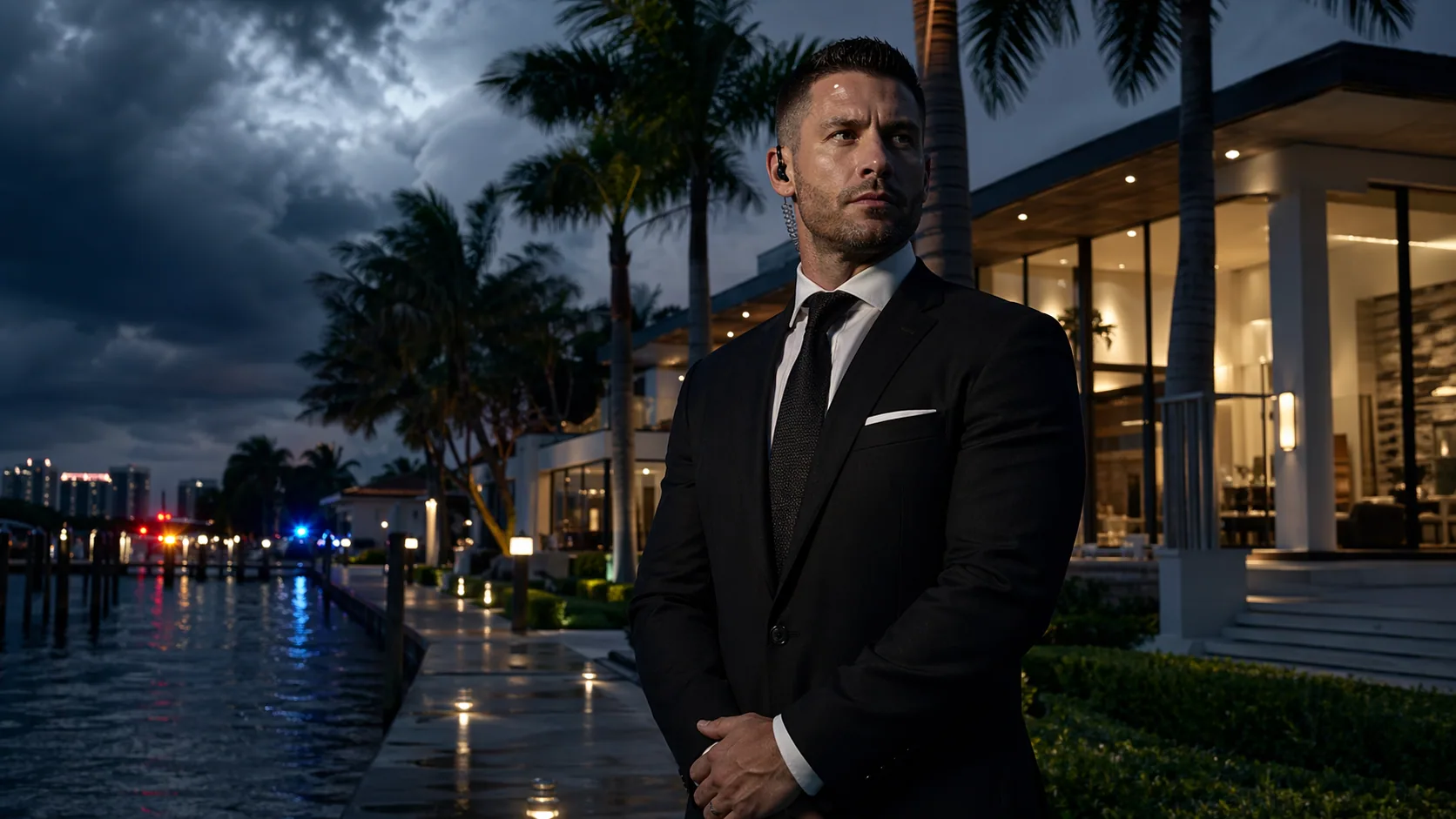
- Executive protection uses proactive threat assessment, advance planning and protective intelligence to prevent incidents.
- Bodyguards provide visible, reactive physical security for specific events.
- Choose based on risk profile, travel frequency, family needs and discretion requirements.
Table of Contents
Executive protection provides comprehensive risk management through advance planning, threat assessment, and discreet operations. Bodyguards offer visible physical security and immediate threat response. The right choice depends on your risk profile, business requirements, and whether you need discretion or deterrence. Understanding these key differences helps corporate executives and high-net-worth individuals make informed protection decisions.
What are the key differences between executive protection and bodyguards?
The distinction comes down to prevention versus reaction.
Executive protection agents focus on eliminating threats before they materialize. They conduct comprehensive risk assessments, plan secure transportation routes, and integrate protective intelligence into daily operations. The goal is ensuring potential threats never become actual incidents. Executive protection is distinct from bodyguards in operational philosophy: it emphasizes proactive prevention, while bodyguards rely on reactive response.
Bodyguards emphasize physical presence and immediate response. They stand between you and danger, deter threats through visibility, and react when dangerous situations arise. Bodyguards primarily focus on preventing immediate physical harm in public or crowded environments, responding directly to threats as they occur. Their value is in the moment, not in the planning that precedes it.
Both bodyguards and executive protection serve legitimate security needs. But they operate from fundamentally different philosophies. Executive protection assumes the best defense is never being in a position to need one. Bodyguard services assume you will be, and prepare to respond.
Organizations increasingly view executive protection as the industry standard for individuals facing modern threats.

How do training and professional standards compare?
Training and credentials separate executive protection from bodyguard services more than any other factor. The depth of preparation, the rigor of standards, and the breadth of operational capability are fundamentally different. Here is what to look for on both sides.
What qualifications do executive protection agents carry?
Professional executive protection agents bring years of specialized experience. Many are military veterans from elite units or former law enforcement. Christopher Smith, about our founder, spent 30+ years across the United States Marine Corps and state law enforcement before leading personal security for Jeff Bezos and the Amazon Board of Directors at Kennedy Space Center.
This background translates into specific capabilities. Threat analysis and risk mitigation. Evasive and defensive driving. Advanced medical response. Surveillance detection. Cross-cultural competence for international operations. Crisis management under pressure. Good communication skills are essential for executive protection agents to effectively convey safety information to clients and coordinate with their teams.
Professional standards are evolving rapidly. The Board of Executive Protection Professionals (BEPP) received ANSI approval for the first national standard for executive protection in December 2025. This standard establishes measurable criteria for both solo practitioners and executive protection teams.
State licensing requirements vary. Virginia requires 60 hours of specialized training beyond standard guard certification. Texas mandates 45 additional hours. These requirements reflect growing recognition that executive protection demands extensive training beyond basic physical security skills.
Professional Standards Comparison
Executive Protection
Military and federal law enforcement veterans with 60+ hours specialized training, ANSI/BEPP standards, threat analysis, surveillance detection and crisis management.
Bodyguard Services
14-20 day training programs focused on defensive tactics, crowd control and immediate response with inconsistent state licensing requirements.
What training do bodyguards typically receive?
Bodyguard training covers narrower ground. Courses typically run 14 to 20 days and cost approximately $2,500. The curriculum emphasizes personal defensive tactics, physical defense techniques, crowd control, and situational awareness.
This training produces competent close protection officers for specific scenarios. Public appearances. Event security. Short-term escort assignments. But it rarely includes the strategic planning skills, intelligence gathering, or threat prevention methodologies that executive protection professionals develop over years.
Regulatory oversight remains inconsistent. Many states require only basic security guard licensing. Background checks, fitness standards, and ongoing training requirements vary widely among providers. The security industry lacks uniform standards for bodyguard qualifications.
What security approaches do they use?
The operational methodology defines the real difference between these two services. How threats are identified, how environments are assessed, and how protection is delivered in practice determines the level of security a principal actually receives.
How does executive protection methodology work?
Executive protection operates proactively. Before you arrive anywhere, executive protection agents have already been there. They have identified vulnerabilities. Established secure routes. Coordinated with local authorities. EP teams plan ahead by mapping out routes, hospitals, and safe rooms days before the client arrives. Planned for contingencies.
This advance work extends to every aspect of your life. Executive protection covers a broader spectrum, including travel logistics, digital security, residential security, and medical emergency planning. Travel security planning begins weeks before departure. Residential security assessments identify and mitigate potential threats to your home and family. Protective intelligence monitoring tracks evolving threats in digital and physical spaces.
Discretion defines the approach. Executive protection specialists operate invisibly when possible. No obvious security entourage. No disruption to business operations or personal life. The best protection is protection you barely notice.

How do bodyguard security methods differ?
Bodyguards work visibly. Their physical presence is the deterrent. They position themselves to intercept immediate threats, escort clients through crowds, and respond when a dangerous situation materializes.
This approach suits specific circumstances. High-profile public appearances where visible security sends a message. Events where deterrence matters more than discretion. Situations where the threat is known and physical deterrence is appropriate.
But visibility has limits. It draws attention. It signals that protection exists, which can itself attract threat actors seeking to test security. And reactive response, by definition, means something has already gone wrong.
Related Protection Services
What does executive protection service scope include?
Executive protection services encompass everything that affects your personal safety and business continuity.
Secure travel logistics. Route planning. Advance work at airports and venues. Alternative routes for emergency response. Coordination with local authorities in domestic and international locations. Understanding local laws and threat climates. Travel security services integrate all these elements into seamless operations.
Residential and family protection. Home risk assessments. Perimeter control. Protection programs for family members. The Hanns Martin Schleyer kidnapping in 1977 demonstrated what happens when routines become predictable. Modern executive protection emphasizes avoiding routinization in both travel and residential security.
Protective intelligence. Monitoring digital exposure. Tracking social media risks. Identifying corporate espionage attempts. Geospatial alerts for emerging threats. This intelligence-driven approach helps mitigate potential threats before they become physical threats.
Crisis management. Medical evacuation protocols. Emergency response plans. Business continuity procedures. When emergencies arise, executive protection teams have already planned the response.
What are bodyguard service limitations?
Bodyguard services focus on close personal protection. This creates inherent limitations.
Limited advance planning. A bodyguard may check the venue and route, but rarely conducts the comprehensive approach that executive protection requires.
No intelligence infrastructure. Bodyguards typically lack the capability to monitor digital threats, conduct threat management analysis, or integrate security personnel with broader risk mitigation strategies.
Shorter-term assignments. Bodyguards work events, appearances, specific travel. Ongoing protection that adapts to evolving threats falls outside their typical scope.
Minimal family coverage. Protection usually centers on the principal. Residential security and family protection require separate arrangements, often with different providers.
Which business factors should influence your decision?
Several factors determine whether you need executive protection or bodyguard services.
Public visibility. Corporate executives, business leaders, and public figures with media exposure face elevated risk. The more visible you are, the more you need comprehensive protection rather than event-specific coverage.
Travel frequency. Frequent domestic and international travel demands travel security services with advance planning, secure transportation, and coordination with local authorities. Bodyguards cannot provide this scope.
Family considerations. If protection needs extend to family members and residential security, executive protection offers integrated coverage. Bodyguards protect individuals at specific moments.
Corporate security integration. Organizations with existing security policies need protection that aligns with broader risk analysis and business operations. Executive protection integrates. Bodyguards often operate in isolation.
Discretion requirements. High-net-worth individuals and corporate executives often prefer invisible security that does not disrupt business or signal vulnerability. Executive protection emphasizes this discretion. Bodyguards are designed to be seen.
Budget considerations. Executive protection costs more because it includes teams, planning, intelligence, and ongoing readiness. Bodyguard services cost less per assignment but offer limited coverage. The right choice depends on whether your risk profile justifies the investment.
- Public visibility and media exposure increase need for comprehensive protection
- Frequent travel requires advance planning and local authority coordination
- Family and residential security needs favor integrated executive protection
- Discretion requirements often outweigh visible deterrence for executives
When should high-net-worth individuals choose executive protection over bodyguards?
Choose executive protection when you need ongoing, comprehensive protection. When your risk profile includes credible threats, international travel, family concerns, or business continuity requirements. When discretion matters more than visible deterrence.
Select bodyguard services for specific events where physical presence and deterrence serve your security plan. When threats are predictable and contained. When you need short-term coverage rather than integrated protection.
Consider executive protection when your personal life and business operations cannot tolerate disruption. When trained professionals operating invisibly serve you better than visible security personnel.
At Praetorian, we assess each client’s specific situation. Schedule a confidential consultation to discuss your protection needs. Our approach starts with understanding your risk profile, lifestyle requirements, and tolerance for visibility before recommending a security team structure.
The global bodyguard industry reached $28.7 billion in 2023. Executive protection services represent 42% of that revenue. Demand for travel protection among tech executives has increased 28% since 2020. These numbers reflect growing recognition that comprehensive protection delivers value that event-specific bodyguard services cannot match.
Learn More About Our Services
Frequently Asked Questions
Executive protection includes teams, advance planning, protective intelligence, and ongoing readiness. Bodyguards provide single-assignment physical security. EP costs reflect threat assessment, secure transportation planning, residential security, family protection, and crisis management.
Yes. Executive protection agents operate invisibly when discretion serves the client. But they can shift to visible physical presence when deterrence is appropriate. This flexibility distinguishes executive protection from bodyguards who are always visible by design.
Initial threat analysis and risk assessment typically require one to two weeks. Comprehensive planning for travel security, residential security, and ongoing protection may take longer. Emergency situations can be addressed faster with modified advance work.
Integrated family protection falls within executive protection scope. Bodyguard services typically protect only the principal. For families of high-net-worth individuals or corporate executives, executive protection provides seamless coverage without coordinating multiple providers.
Verify military or federal law enforcement background. Check state licensing requirements. Ask about ANSI or BEPP standard compliance. Request evidence of liability insurance. Review customer service experience and references from similar clients.