
Executive Protection
Executive Protection
Personal protection for principals who require more than a visible security presence. Discreet, capable, and built around your life.
You run a company that moves capital and decisions across state lines. Or you hold family assets that draw attention no one advertises. You attend industry events where your face and schedule become public for a night. Your home sits exposed because the address is known to too many people. In each case the risk is the same: someone has already started watching before you feel it. Executive protection closes that gap by placing trained operators between you and the threat, long before any contact happens. The detail does not stand around looking tough. It removes the opportunity for trouble through advance intelligence, controlled movement, and quiet coordination. When the day ends and nothing happened, that is the measure. You return to your family or your board without incident because the variables were managed hours or days earlier. This service fits the corporate executive whose travel includes private meetings in unfamiliar cities. It fits the family office principal who needs residential routines protected without turning the house into a fortress. It fits the public figure who must appear at a fundraiser yet keep control of access and exits. It fits the principal whose home and daily patterns create predictable exposure. The result is the same across all of them: freedom to operate without the constant calculation of risk.
Advance Work and Threat Assessment
Every protection assignment begins with information collection and analysis. We review open-source material, travel history, known associates, and any prior incidents that touch the principal. Patterns of life receive the same scrutiny. Where you live, how you commute, the venues you frequent, and the people who have access all become data points. The goal is to map exposure before movement starts. Surveillance detection routes form part of the advance. Operators walk or drive the planned path in advance, noting choke points, camera coverage, and places where an adversary could stage. Venue surveys include exits, service corridors, and liaison points with local security. Threat assessment is not a checklist. It is a living document that updates as new information arrives. When the principal moves, the advance team has already cleared the route, identified medical facilities, and established fallback positions. The principal never sees most of this work. That is the point. The detail moves because the ground has been prepared. This process repeats for every significant trip or event. Static protection follows the same discipline. Residential exposure gets mapped the same way a travel day does. The result is fewer variables left to chance.
Secure Transportation and Route Planning
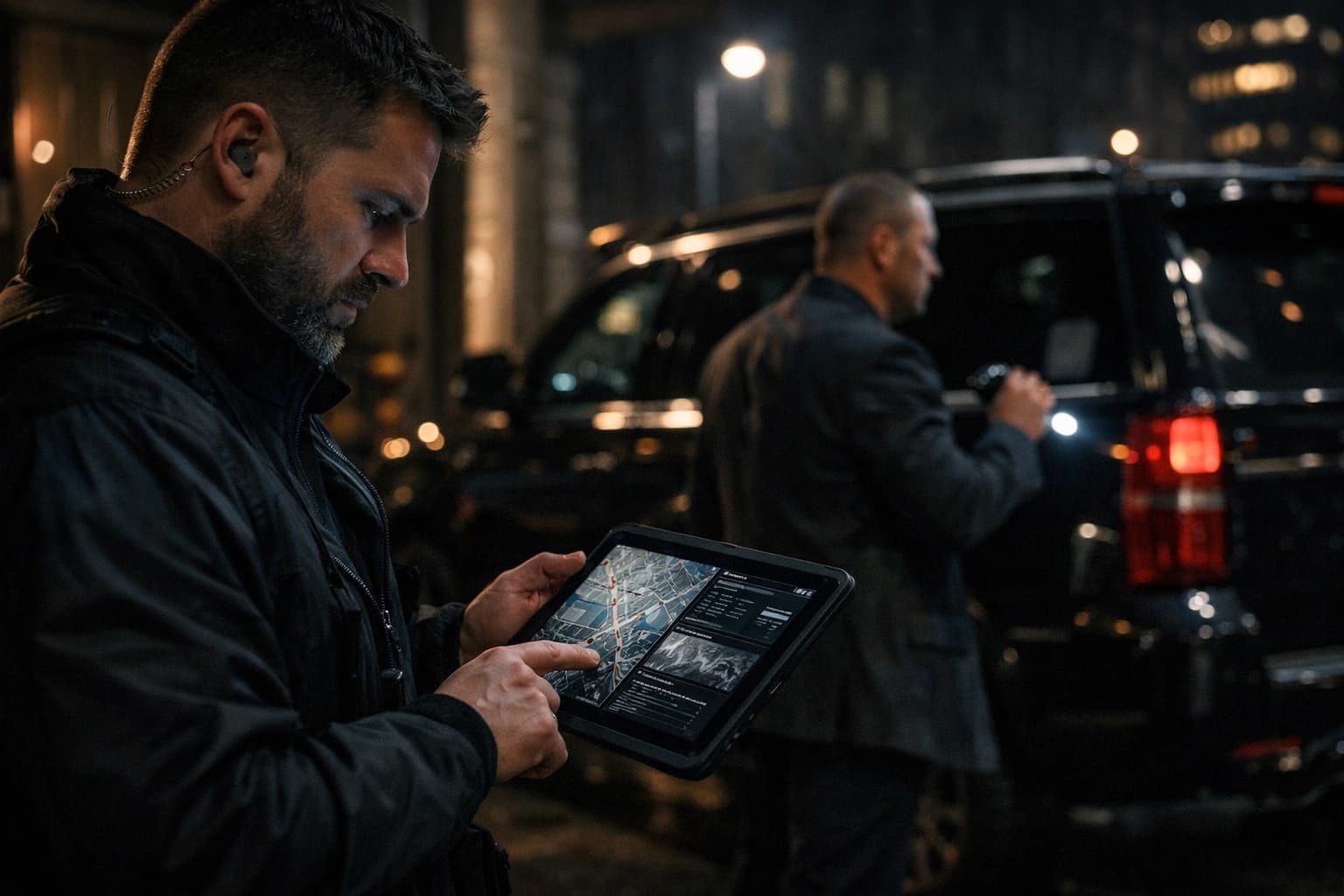
Transportation is never left to chance or public apps. Vehicles are selected for reliability, visibility, and escape capability. Routes are planned with multiple options, including primary, alternate, and emergency paths. Timing accounts for traffic patterns, construction, and known high-risk periods. The advance team drives every route at the expected time of day to confirm conditions. Pickup and drop points are chosen for cover and control, never for convenience alone. When the principal enters the vehicle, the operator already knows the destination layout, parking options, and nearest medical support. Real-time adjustments come through the operations cell. If a route becomes blocked or an anomaly appears, the driver receives immediate direction without the principal needing to intervene. Secure transport extends to ground and air movements. Airport procedures, private aviation coordination, and hotel arrivals all receive the same advance treatment. The principal moves on schedule and without exposure because the transportation layer has been hardened in advance. This is not about luxury. It is about removing the moment when a vehicle becomes the vulnerability.

Residential and Venue Security Overlap
Home and event locations share the same operational principles. Residential protection begins with a full property survey that identifies access points, sight lines, and routine movement patterns. Alarm integration, camera placement, and response protocols are reviewed against the principal's actual schedule. School runs, family appointments, and evening activities receive dedicated advance work so the detail does not create new patterns. Venue work follows the identical process. Whether the location is a corporate boardroom, a private residence for dinner, or a large public event, the team surveys entry and exit routes, identifies medical and security contacts, and establishes communication links before the principal arrives. The overlap matters because threats do not respect boundaries between home and work. An issue that begins at a venue can follow the principal home. The same operators who cover movement often cover the residence during high-risk periods. This continuity reduces hand-off errors and keeps the protective picture complete. The principal experiences seamless coverage because the residential and venue layers are planned as one continuous operation.

Communications and the Operations Cell
Protection requires constant information flow without drawing attention. Every operator carries encrypted radios and a secondary channel for the operations cell. The cell sits off-site or in a mobile command position and tracks the principal's location, route status, and any developing intelligence. Check-ins occur at set intervals. Anomalies trigger immediate escalation. The principal carries a discreet alert device that reaches the cell directly. Venue staff and local law enforcement receive only the information they need through the advance team. No public displays of communication occur. The operations cell also maintains the master timeline, medical evacuation options, and contact lists for every phase of the day. When the detail is stood down for the night, the cell continues monitoring until the next shift begins. This structure keeps the principal informed only when necessary and keeps operators synchronized at all times. The result is a protective envelope that operates in real time while remaining invisible to the principal and to observers.
Medical Readiness and Crisis Response
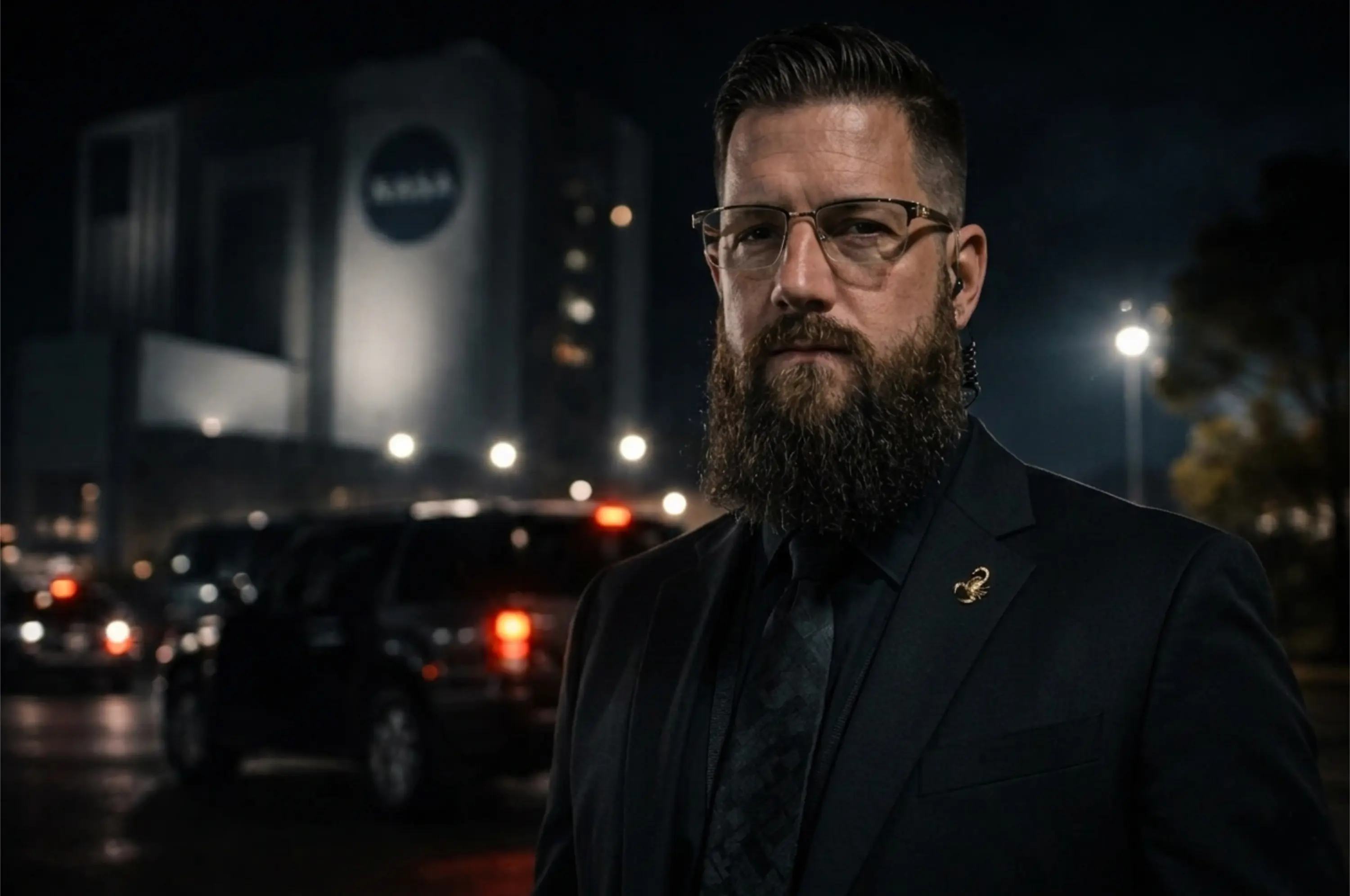
Medical capability is built into every detail. Operators maintain current TCCC certification and carry IFAK kits sized for the environment. Evacuation planning identifies the nearest trauma centers and alternate routes to them before movement begins. The operations cell holds updated contact information for on-call physicians and air medical support when required. In a crisis the first action is stabilization and extraction. The principal is moved to the vehicle or a secure location while the cell coordinates with emergency services. No one waits for external response before initiating movement. Training includes hemorrhage control, airway management, and rapid assessment under stress. The same protocols apply at the residence. A medical event at home receives the same advance planning as an event venue. The goal is always to reach definitive care faster than the threat can develop further. This readiness is not advertised. It is simply present and tested through drills that the principal does not see. When seconds matter, the detail already knows the next step.
Christopher Smith
Founder, Praetorian Executive Protection
Frequently Asked Questions
What does executive protection cost?
Cost depends on risk level, duration, number of operators, travel requirements, and whether the detail runs twenty-four hours or covers specific movements only. No two principals present the same exposure profile, so no published rate sheet exists. A confidential consultation establishes the exact scope and delivers a fixed proposal. That conversation is the only way to receive accurate pricing and a clear operational plan.
How is executive protection different from a bodyguard?
A bodyguard reacts to contact. Executive protection prevents contact through advance work, threat assessment, route planning, and continuous intelligence. The detail operates ahead of the principal rather than beside him. Most of the work occurs before the principal ever steps outside. The visible close protection is only the final layer of a much larger operation.
Do I need armed protection?
Armed protection is one tool, not the default. We hold Class G licensing and deploy firearms only when the threat assessment and client preference require it. Many details run effectively with unarmed operators who focus on detection and de-escalation. The consultation determines whether armed capability adds necessary control or simply increases visibility.
How fast can a detail stand up?
A minimal protective presence can be in position within twenty-four hours once the consultation and basic advance work are complete. Full-scale operations with multiple operators, vehicles, and communications require forty-eight to seventy-two hours for proper planning. Emergency short-notice coverage is available when the risk profile justifies it.
What is the difference between residential and event executive protection?
Residential protection protects daily patterns, home access, and family routines over weeks or months. Event protection covers a defined window with heavy advance work on a single venue and rapid extraction plans. Both use the same operators and operations cell. The difference is duration and the density of advance work required for the specific exposure.
Can executive protection work for a family with kids?
Yes. School transport, after-school activities, and family routines receive dedicated advance work and dedicated operators when required. The detail integrates into existing schedules without creating new patterns that draw attention. Residential security overlaps with movement protection so children move between home and school under the same controlled conditions as the principal.
Continue Exploring Praetorian
Pair this capability with the problem-focused solutions, geographic coverage, and reference content it most often runs alongside.