
Protective Intelligence
Protective Intelligence and Threat Assessment
We read environments before anything happens. Proactive analysis that eliminates risk before it materializes.
Protective intelligence puts decisions ahead of incidents. Corporate security officers planning major events use it to spot patterns that standard planning misses. High-net-worth families who notice unfamiliar vehicles near the property gain early indicators of intent. Public figures dealing with repeated approaches from the same individuals receive documented timelines and exposure points. Companies evaluating inbound business risks receive clear assessments of who has access to what information and how that access could be exploited. The result is a documented picture of the threat environment before any principal moves or any asset is exposed. This work draws from thirty years across Marine Corps operations, state law enforcement investigations, and direct site security leadership for high-profile principals. It focuses on what matters: verifiable indicators, not speculation. Every brief ends with specific recommendations that the protection team can execute immediately. The process stays discreet by design. Findings remain internal unless the client directs otherwise. This is the foundation that makes every subsequent protection measure more effective and less visible.
What Protective Intelligence Actually Is
Protective intelligence is the disciplined collection and analysis of information to identify threats before they reach the principal. It differs from a background check, which only reviews past records. It also differs from raw open-source intelligence, which simply gathers data without operational context. Here the focus stays on the principal's specific exposure, movement patterns, and the people or groups who might act on that exposure. The output is an intelligence brief that names the risks, ranks them by likelihood and impact, and lists concrete steps to reduce each one. This work rests on experience in military intelligence, state law enforcement investigations, and corporate security environments. It produces decisions, not reports. The goal is control of the information environment that surrounds the principal, so the protection team can operate from a position of knowledge rather than reaction.
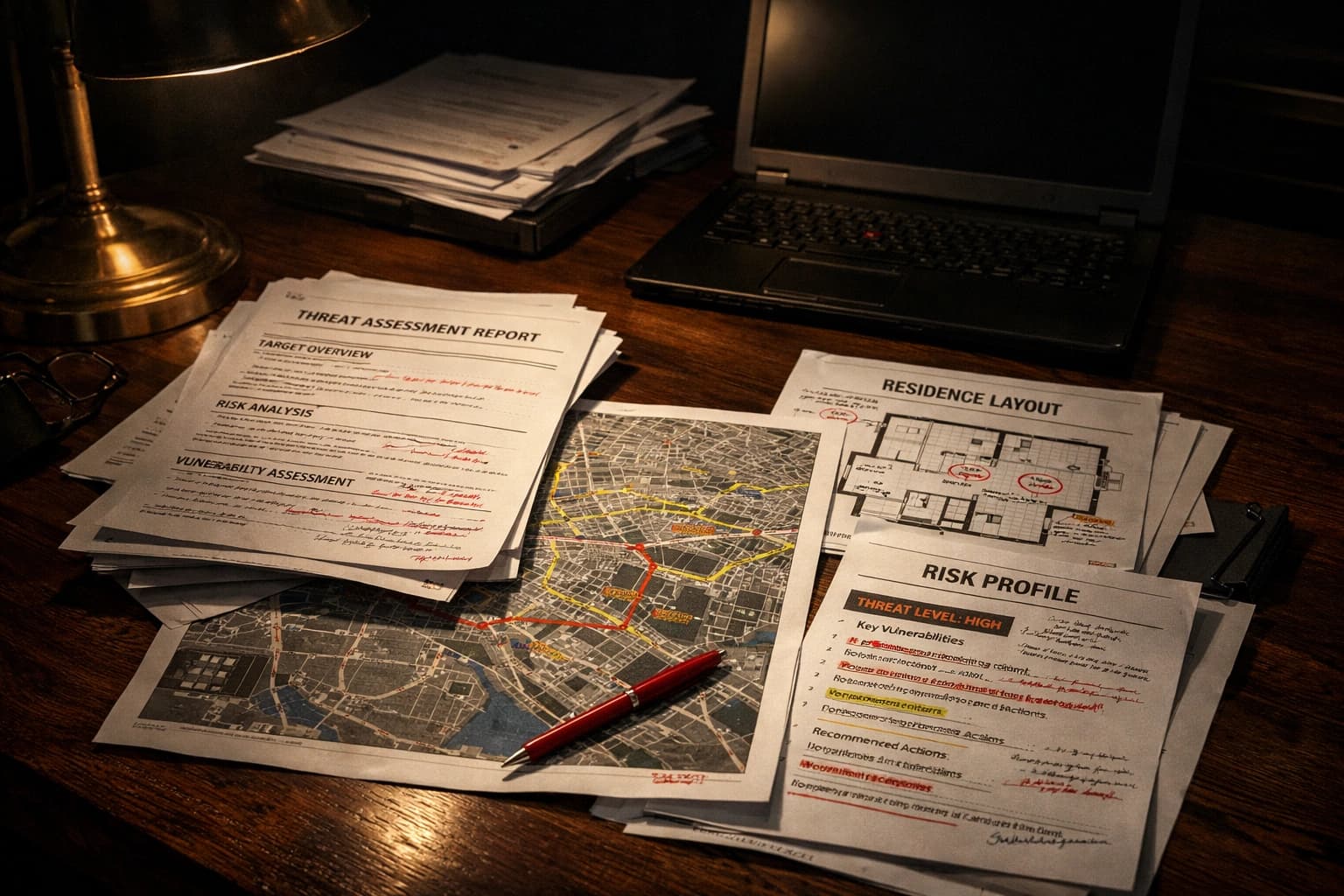
Pre-Engagement Threat Assessment Workflow
Every engagement starts with a structured threat assessment. We begin by mapping the principal's known routines, travel history, residential and business locations, and public profile. Next we examine specific concerns the client raises, whether those involve recent approaches, unusual inquiries, or upcoming events. The workflow then turns to the surrounding environment: who has legitimate access to the principal's schedule, where surveillance opportunities exist, and what indicators would signal preparation for an incident. The assessment closes with a written brief that assigns risk levels and recommends immediate actions. This process takes the buyer scenarios into account. A corporate security officer receives event-specific vulnerabilities. A family receives property perimeter indicators. A public figure receives documented contact patterns. A company receives supply-chain or partner exposure points. The brief drives every later decision on staffing, routing, and monitoring.

Open-Source Intelligence and Digital Exposure Mapping
Digital footprints create physical risk. We map every piece of publicly available information that could reveal location, schedule, family details, or daily patterns. This includes social media accounts, property records, corporate filings, data-breach results, and professional associations. The mapping identifies what an adversary could already know and what can be reduced or obscured. For a corporate officer, this covers event venues and attendee lists. For a high-net-worth family, it covers residential addresses and vehicle registrations. For a public figure, it covers repeated mentions that create predictable movement. For a company assessing risk, it covers partner disclosures that leak operational details. The deliverable is a prioritized list of exposures with specific mitigation steps, such as account adjustments or information removal requests. The focus remains on what an actual adversary would use, not theoretical data points.
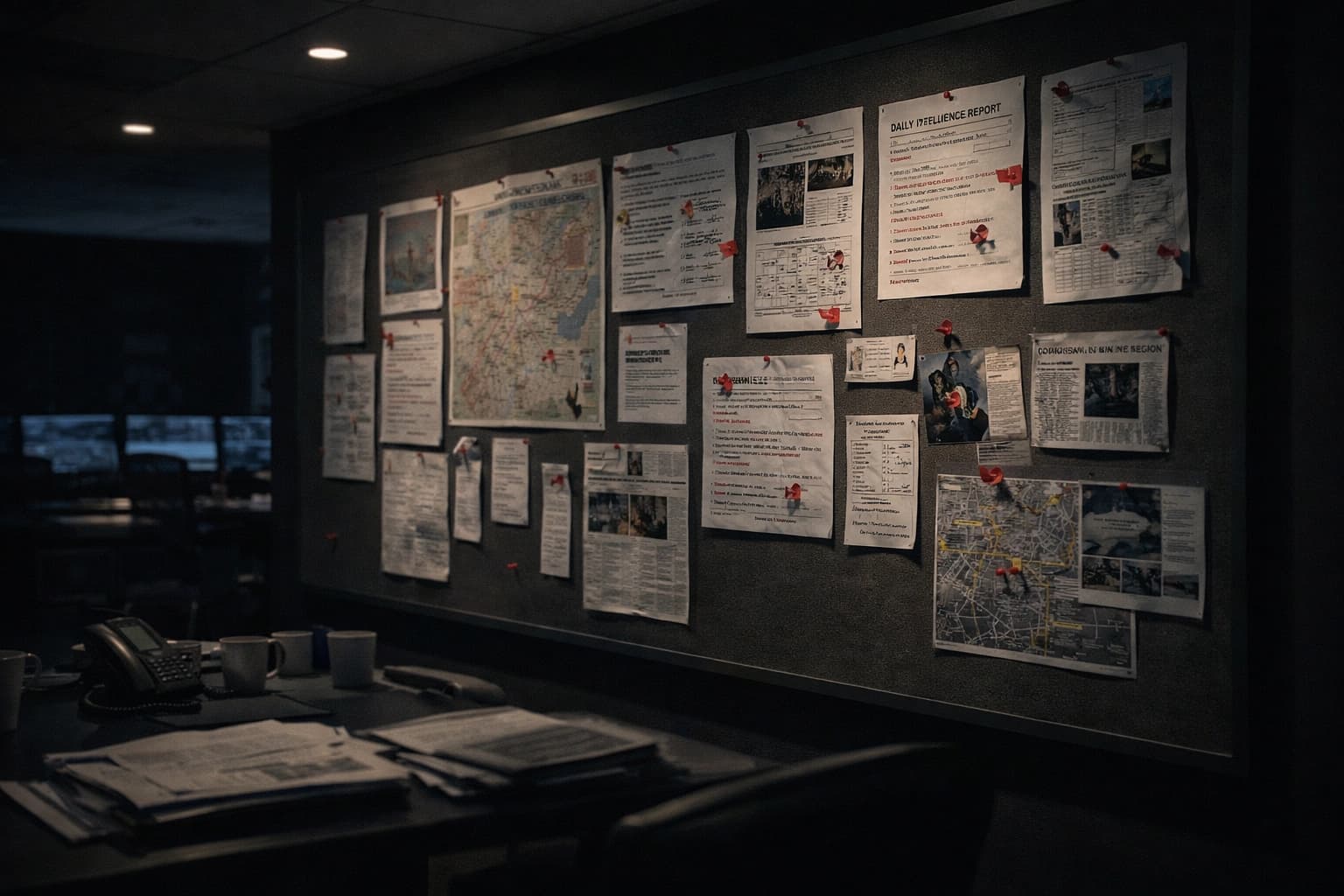
Surveillance Detection and Counter-Surveillance
Threats often begin with observation. We train and equip teams to recognize surveillance activity directed at the principal or the property. This includes repeated vehicles, individuals loitering near access points, or patterns of inquiry that precede physical approaches. Counter-surveillance measures are then applied to disrupt that observation without drawing attention. For the corporate security officer, this covers event perimeter and ingress routes. For the family noticing strangers, it covers property approaches and neighborhood patterns. For the public figure with stalking concerns, it covers repeated contact locations. For the company, it covers facility and executive movement. The outcome is early warning that allows the protection team to adjust posture before any incident occurs. All measures stay within legal bounds and produce records the client can review.

Ongoing Intelligence Monitoring Between Engagements
A single assessment loses value as conditions change. Between active engagements we maintain monitoring of the threat environment specific to each principal. This covers new public mentions, changes in known associates, shifts in digital exposure, and any indicators that align with previously identified risks. Updates are delivered on a schedule the client selects, with immediate alerts for time-sensitive developments. Corporate security teams receive event-related updates. Families receive property and neighborhood indicators. Public figures receive contact pattern changes. Companies receive partner or supply-chain developments. The monitoring keeps the original threat assessment current without requiring constant on-site presence. It preserves the advantage of preparation while the principal continues normal activities.

Christopher Smith
Founder, Praetorian Executive Protection
Frequently Asked Questions
What is the difference between protective intelligence and OSINT?
Protective intelligence applies open-source information to one principal's specific threat picture and converts it into actionable recommendations. Raw OSINT stops at collection. Protective intelligence adds operational context from military, law enforcement, and corporate security experience, then ranks risks and lists mitigation steps. The client receives decisions, not data.
Can protective intelligence prevent stalking?
Protective intelligence identifies patterns of approach, documents repeated contacts, and maps exposure points that a stalker could exploit. Early detection allows the client to adjust routines and increase physical measures before incidents escalate. It does not replace law enforcement reporting when criminal activity is confirmed.
How long does a threat assessment take?
A standard pre-engagement assessment requires three to five business days once all requested information is provided. Complex cases involving multiple locations or extended travel histories can take seven to ten days. Rush assessments for time-sensitive events are available with priority scheduling.
Is protective intelligence legal?
All protective intelligence work uses only publicly available sources and legal surveillance detection methods. We operate under Florida Class B agency licensing and adhere to state and federal statutes governing private investigations and security services. No illegal collection or monitoring occurs.
Do you share findings with law enforcement?
Findings remain confidential with the client unless the client directs otherwise or a legal requirement exists. When criminal activity is confirmed, we advise the client on proper reporting channels and can assist with evidence packaging if requested. We do not initiate contact with law enforcement without client approval.
Can a corporate security team subcontract protective intelligence?
Yes. Corporate security teams routinely engage protective intelligence as a specialized capability they do not maintain in-house. We deliver the assessment, monitoring, and briefings in a format the internal team can integrate directly into existing programs. All work remains under the client's direction and control.
Continue Exploring Praetorian
Pair this capability with the problem-focused solutions, geographic coverage, and reference content it most often runs alongside.