
- Hostile termination security reduces workplace violence risk during high-stakes employee separations.
- The process includes pre-termination threat assessment, discreet plainclothes security presence during the meeting, controlled exit procedures, and post-termination overwatch of the facility and key personnel.
- Professional security presence also reduces civil liability for the employer.
Table of Contents
Employee terminations are routine. Most are uneventful. But the ones that are not uneventful can be catastrophic.
Workplace violence incidents related to terminations represent a small percentage of all separations, but they account for a disproportionate share of workplace violence fatalities. For HR directors, corporate counsel, and executive leadership, the question is not whether a termination will go wrong. It is whether the organization has taken reasonable steps to manage the risk if it does.
This is not a service that most companies think about until they need it. By then, they are often 24 to 48 hours from the termination and scrambling to find qualified support.
When should you engage security for a termination?
Not every termination requires professional security. Most do not. But certain indicators should trigger the conversation.
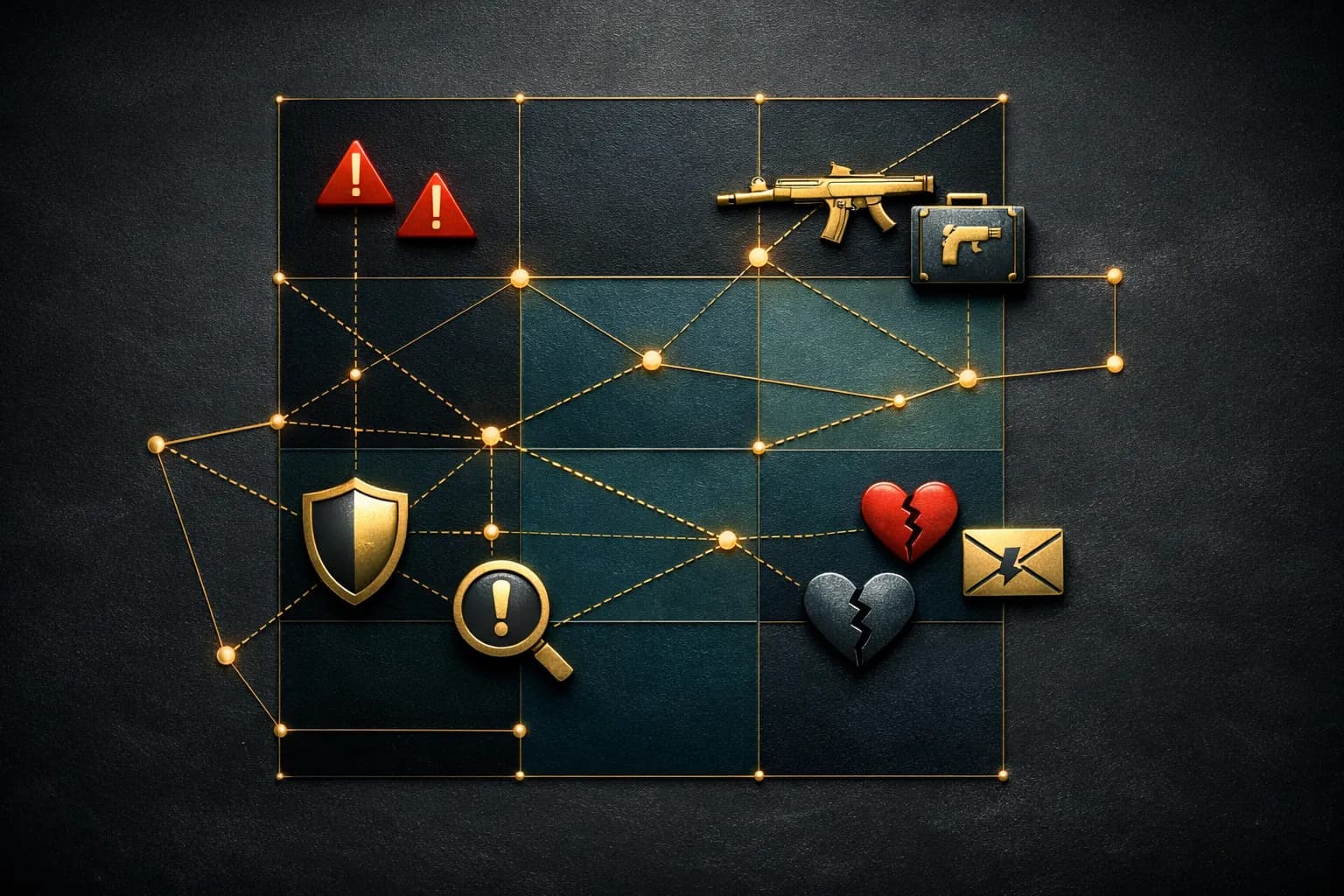
Direct or implied threats. The employee has made statements, in person, in writing, or on social media, that reference violence, retaliation, or "making people pay." Even vague statements like "they'll be sorry" or "I have nothing left to lose" warrant a security assessment.
History of aggressive behavior. Prior incidents of workplace aggression, confrontations with coworkers or management, or documented anger management issues.
Access to weapons. The employee is known to own firearms, has a concealed carry permit, or has referenced weapons in workplace conversations. In Florida, where concealed carry is common and Constitutional Carry is law, this factor is especially relevant.
Grievance-driven separation. The employee believes (accurately or not) that the termination is unjust, discriminatory, or retaliatory. The perception of injustice is a stronger predictor of violence than the objective circumstances.
Personal instability. Recent divorce, financial distress, substance abuse, or other personal stressors that compound the impact of job loss.
Mass layoffs or restructuring. When multiple employees are being separated simultaneously, the complexity multiplies. Group dynamics, rumor propagation, and the cumulative stress on remaining employees all increase the risk profile.
If any of these factors are present, the cost of a security consultation is trivial compared to the cost of an incident.
What does a pre-termination threat assessment include?
Before the termination meeting, the security team needs information. This is not a background check. It is a focused risk assessment designed to inform the security plan for the specific event.
Review the employee's HR file for documented incidents, complaints, and behavioral flags. Interview the direct supervisor and HR representative for context that may not be in the file. Assess the physical layout of the termination location: where will the meeting take place, what are the exits, what is the proximity to other employees, and where will the employee go after the meeting?
Evaluate the employee's access: badge access to the building, access to sensitive systems, physical keys or codes, and company-issued property that must be recovered.
The threat assessment produces a security plan specific to this termination: the number and positioning of security personnel, the communication protocol, the escort route from the meeting room to the exit, and the contingency plan if the situation escalates.
Core Elements of a Pre-Termination Assessment
HR File Review
Documented incidents, complaints, performance history, and prior behavioral flags.
Stakeholder Interviews
Direct supervisor, HR, and any witnesses provide context not captured in formal records.
Site Survey
Physical layout analysis including meeting room, exits, adjacent workspaces, and egress routes.
Access Audit
Badges, keys, system credentials, and company property that must be recovered during exit.
How is the termination meeting itself managed?
During the meeting itself, the security team is positioned but not prominent. In most cases, operators are in plainclothes and positioned outside the meeting room, in the hallway, or in an adjacent office. The HR representative and the manager conducting the meeting should be briefed on the security plan: where the security team is, how to signal for assistance, and what to do if the employee becomes agitated.
The security team's role during the meeting is to observe and be ready. They are not there to intimidate the employee. Intimidation escalates. Professional de-escalation, verbal judo, and a calm, controlled environment de-escalate.
If the employee becomes verbally aggressive, the security team can enter the room to provide a stabilizing presence. If the situation escalates to physical threat, the team intervenes to protect the HR representative, the manager, and the employee from harm.
The goal is not to manage a crisis. The goal is to ensure the environment never reaches crisis.
What does a controlled exit procedure involve?
After the meeting, the employee should be escorted from the building through a pre-planned route. This route avoids high-traffic areas, other employees, and any spaces where a confrontation could develop. If the employee has a personal workspace, property collection should happen with a security team member present, or personal items should be boxed and shipped after the employee has left the premises.
Company property recovery (badges, laptops, keys, parking passes) happens as part of the exit process. IT should be coordinated to revoke system access simultaneously with the termination meeting, not after the employee leaves the building.
The security escort continues to the employee's vehicle. Once the individual has left the property, the security team confirms departure and reports to the client contact.
What occurs during post-termination overwatch?
The first 24 to 72 hours after a hostile termination represent the highest risk period for retaliatory action. The individual has had time to process the termination, potentially consume alcohol or substances, and potentially plan a response.
For high-risk terminations, Praetorian provides post-termination overwatch of the facility. This may include physical presence at the location for a defined period, monitoring of building access systems for attempted re-entry, and in some cases, monitoring the residences of the HR director, the terminating manager, or other individuals who were specifically named by the employee.
Post-termination overwatch is scaled to the threat level identified in the pre-termination assessment. Not every termination requires 72 hours of physical monitoring. But every high-risk termination requires a plan for the period after the employee leaves.

How does professional security presence affect liability exposure?
Beyond the safety imperative, professional security during a hostile termination demonstrates that the organization exercised "reasonable care" in protecting its employees. This is not an abstract legal concept. In wrongful death and workplace violence litigation, the question of whether the employer knew the risk existed and what they did about it is central.
Engaging professional security, conducting a threat assessment, and documenting the security plan creates a defensible record. The organization identified the risk, engaged qualified professionals, and took measurable steps to protect its people. That record matters if the situation does escalate, and it matters in court.
Related Protective Services
Why is confidentiality critical in these engagements?
Every aspect of a hostile termination engagement is confidential. The identity of the employee, the circumstances of the termination, the threat assessment findings, and the security plan are never disclosed outside the client relationship. Praetorian operates under NDA for all corporate security engagements. The employee's privacy is protected. The organization's internal matters remain internal.

- Discreet presence prevents escalation while maintaining readiness.
- Pre-termination assessment drives every tactical decision.
- Controlled exit and simultaneous IT revocation limit exposure.
- Post-termination overwatch addresses the highest-risk period.
- Documented reasonable care protects the organization legally.
Frequently Asked Questions
Hostile termination security is professional security support during the termination of an employee who has been identified as a potential risk for violence, retaliation, or disruptive behavior. It includes pre-termination risk assessment, on-site security during the termination meeting, controlled exit from the facility, and post-termination monitoring.
Any time the employee has made threats, has a history of aggressive or erratic behavior, has access to weapons, has expressed grievances related to the termination, or when the termination involves sensitive circumstances such as mass layoffs. HR directors and corporate counsel often recommend security involvement when the risk assessment is anything above baseline.
Pricing depends on the scope of the engagement: single termination versus mass layoff, duration of post-termination overwatch, number of personnel required, and geographic location. Praetorian prices all engagements through confidential consultation based on the specific risk profile and requirements.
In most engagements, the security presence is discreet. Operators may be positioned in plainclothes outside the meeting room, in an adjacent office, or in the lobby. The goal is to maintain a calm, professional environment while being prepared to intervene immediately if the situation escalates. In some higher-risk scenarios, a visible uniformed presence may be appropriate as a deterrent.
After the meeting, security escorts the individual through a controlled exit from the facility, ensures company property is recovered (badges, laptops, keys), and monitors the premises for a defined period. Post-termination overwatch can extend 24 to 72 hours depending on the threat level, and may include monitoring the residences of key executives if specific threats were made.
With over 30 years across the United States Marine Corps, state law enforcement, and corporate executive protection for Jeff Bezos and the Amazon Board at Kennedy Space Center, Christopher Smith has managed numerous high-risk personnel separations. These real-world operations inform the discreet, measured approach Praetorian applies to every engagement.
References
Facing a high-risk employee separation?
Praetorian delivers discreet, experience-based support grounded in real operational expertise.
Contact Us