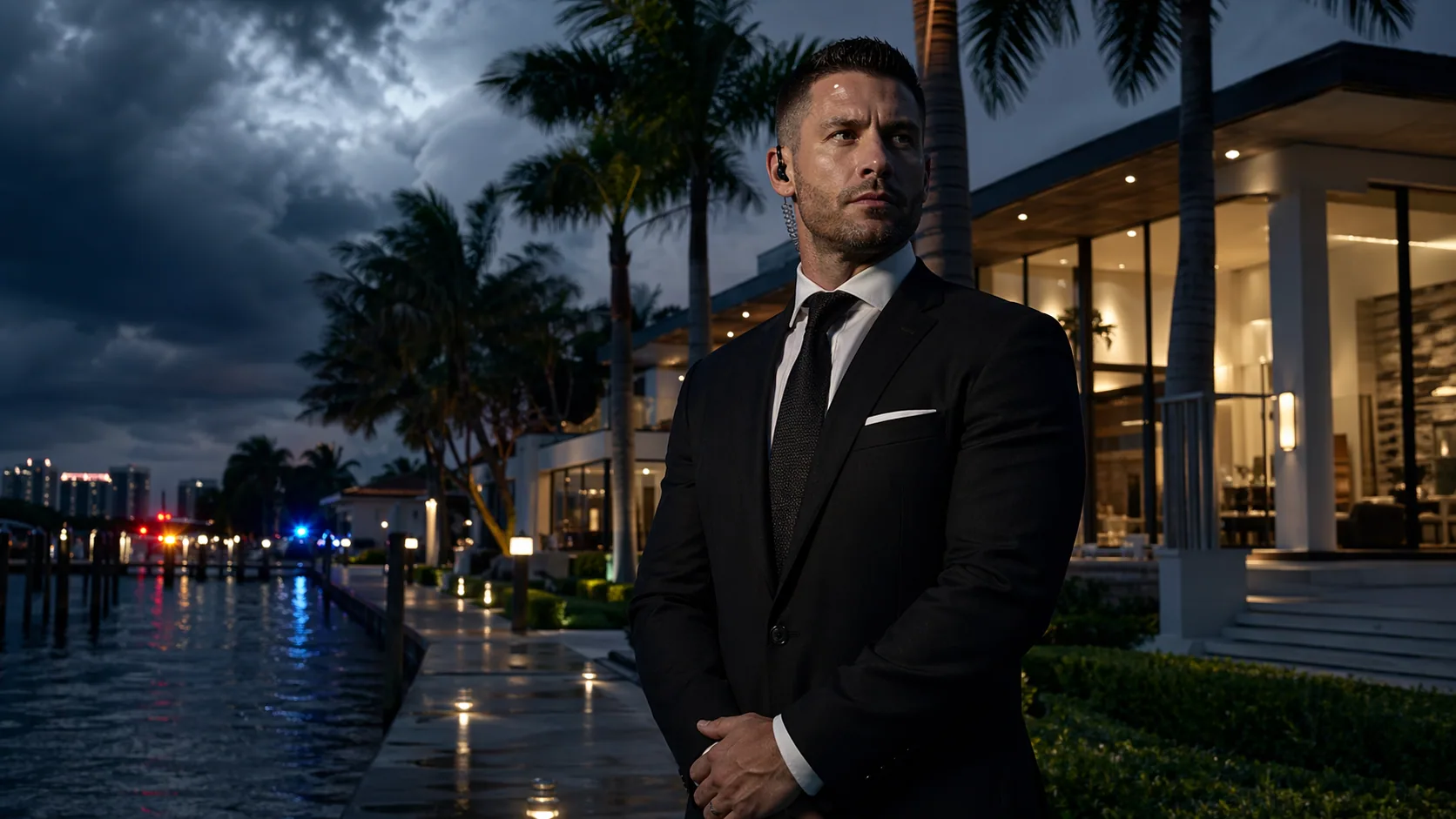
- Cruise ship security protects the vessel and passengers collectively through patrols and surveillance but does not provide personal protection for individuals.
- High-net-worth executives and families with specific risks often require private executive protection to address gaps in coverage during embarkation, excursions, and digital exposure.
Table of Contents
Executive cruise travel sits in an awkward seam between public hospitality and private security. The ship is a small floating city. The cruise line has a security department that handles fights, theft, and lost passengers. What it does not do, and was never designed to do, is provide individual protection for a chief executive, a family with a custody concern, or a principal whose face is on a magazine cover.
The mismatch is rarely a problem until it is. By then, the principal is in a terminal in Cozumel with porters touching the bags and no one watching the angles.
How Does Onboard Law Enforcement Work on a Cruise Ship?
Cruise ships do not carry traditional police. They rely on an internal security department, shipboard policies, and law enforcement at each port. The ship security structure includes security officers, a Chief Security Officer, and the captain as ultimate authority under flag-state law.
Crime reports on cruise ships are managed by the Chief Security Officer and can lead to immediate disembarkation and handover to law enforcement. Most vessels maintain an onboard brig to hold offenders until the next suitable port. Cruise lines operating from US ports are required by the Cruise Vessel Security and Safety Act of 2010 to maintain crime logs and assist passengers in contacting law enforcement, ensuring compliance with both flag-state and port-nation regulations.
What Does a Cruise Ship Security Officer Actually Do Day to Day?
How Do Boarding and Screening Procedures Operate?
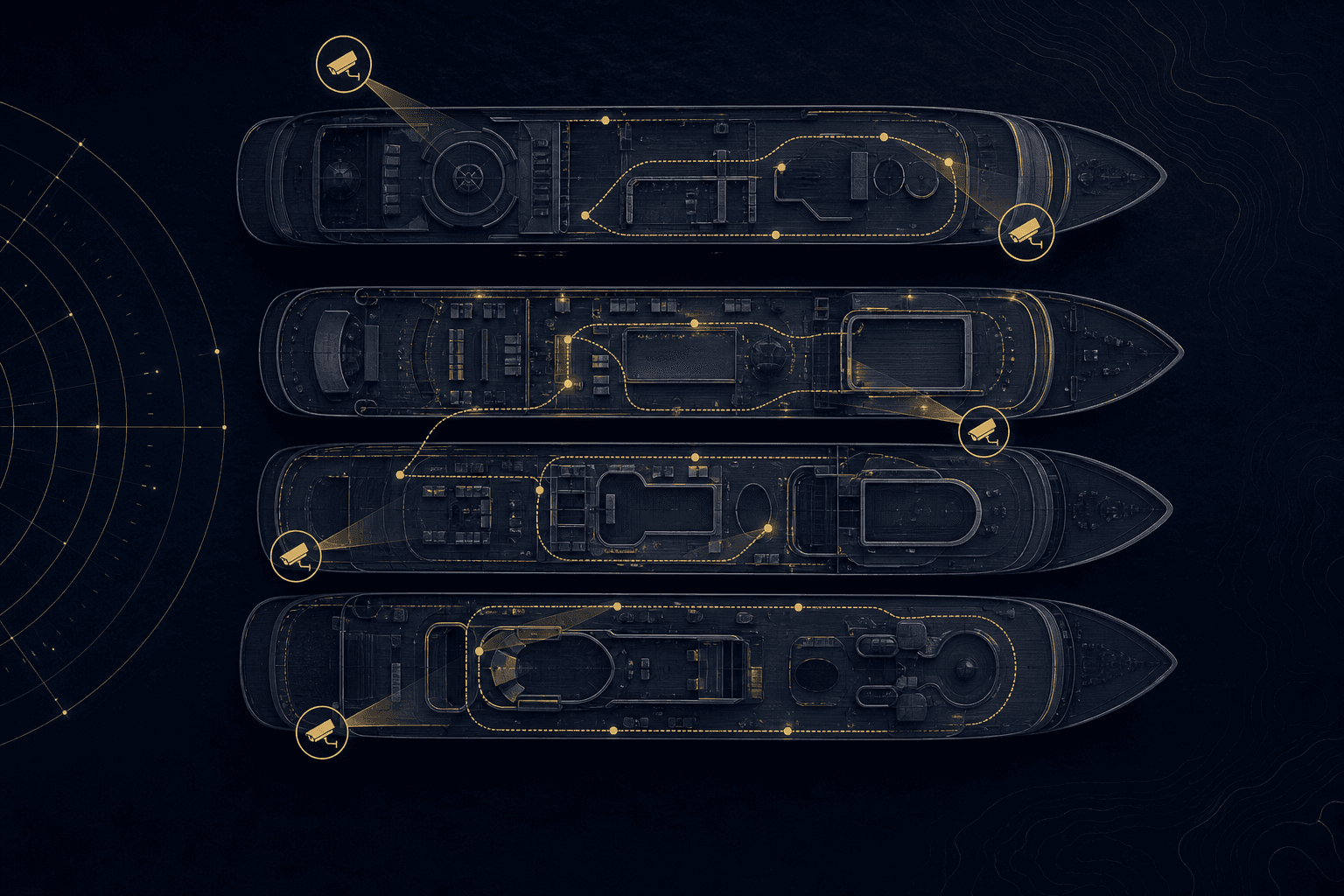
Cruise ship security officers handle access control, screening, investigations, and emergency response for the entire ship. Their responsibilities span the full voyage. Core tasks include boarding and baggage screening at the terminal, monitoring gangways, and enforcing ID and access policies.
How Do Onboard Patrols and Emergency Response Function?
Onboard, officers patrol decks and restricted spaces, respond to fights or disturbances, and support medical staff during incidents. The security team's effort is focused on proactively mitigating risk and managing security incidents to ensure the safety of all passengers and crew. Notice the framing: all passengers and crew. Not your principal specifically.
What Do Investigations and Coordination Involve?
Investigative duties include taking statements, preserving evidence, and coordinating with shoreside authorities. To become a cruise ship security officer, individuals typically complete an accredited maritime training program that includes training in passenger vessel security and maritime law.
What Cruise Ship Security Actually Covers
Vessel and Population Safety
Patrols, access control, screening, and general passenger welfare across all decks and public spaces.
Incident Response
Fights, theft, medical events, unattended luggage, intoxicated passengers, and missing-person reports.
Investigations and Coordination
Statement collection, evidence preservation, brig management, and coordination with the FBI or port authorities.
Regulatory Compliance
CVSSA crime logs, ISPS Code compliance, ship security plan execution, and flag-state reporting obligations.
Where Are the Real Risk Points on a Cruise for Executives and Families?
The highest-risk periods are embarkation, debarkation, and shore excursions. These are the moments when you move through uncontrolled public spaces outside ship security's direct control.
What Risks Exist During Embarkation and Debarkation?
Embarkation risks include crowded terminals, porters handling luggage, public curbside drop-off, and exposure in areas covered by local port facility security rather than the cruise line. Debarkation compounds these issues. Rushed crowds, tired travelers, porters, taxis, and ride-share zones create opportunities for targeting or surveillance.
How Secure Are Shore Excursions?
Shore excursions remove you from the controlled ship environment entirely. You move through multiple jurisdictions, often relying on local tour operators with varying safety standards. From my experience coordinating multi-agency movements at Kennedy Space Center, I can tell you that a simple Caribbean excursion can involve local police, private tour vendors, port authority rules, and US law on reentry.
““Most clients think the ship is the threat surface. The ship is the safest piece of the trip. The threat surface is the terminal at 8 a.m., the tender at 11, and the back of a taxi van in Roatán at 2.
Christopher SmithFounder, Praetorian Executive Protection
What Are the Limits of Cruise Line Security for High-Net-Worth and Corporate Travelers?
Cruise ship and cruise line security protect the population and the vessel. They are not contracted to provide individual executive protection or family protection. Security officers do not conduct advance route planning, low-profile movements, or personal threat monitoring for specific guests.
Corporate security directors often assume ship security handles everything. It does not. Their remit stops at ship and port procedures. Private executive protection fills the gap for targeted threats, custody concerns, or high media profiles.
Cruise Line Security vs. Private Cruise Protection
- +Covers the vessel comprehensively with patrols, surveillance, and incident response
- +Manages population-level safety effectively for the average traveler
- +Required by CVSSA and ISPS Code, professionally trained for maritime environments
- +Coordinates with the FBI and port authorities when major incidents occur
- -Cannot dedicate personnel to any single passenger or family
- -Has no jurisdiction or visibility in the terminal, on tenders, or during shore excursions
- -Not equipped to manage specific named threats, custody orders, or stalker patterns
- -Cannot perform advance work, OSINT monitoring, or movement planning for a principal
How Does Private Cruise Ship Security Differ from Cruise Line Security?
Private cruise ship security is a dedicated protection detail that embarks as paying passengers, integrates quietly with ship operations, and focuses solely on the client. Praetorian operators travel as family guests, not uniformed guards. We respect cruise line rules while providing close protection, surveillance detection, and movement planning.
Praetorian uses pre-cruise protective intelligence to assess ports, excursions, political climate, and medical infrastructure along the itinerary. This work happens before you set sail.
Related Protection Services
Cruise Protection
Praetorian's dedicated cruise practice, with operators sailing as paying passengers from Florida ports.
Maritime and Yacht Security
Close protection for private vessels with direct integration into captain and crew operations.
Executive Protection
Close protection details, advance work, and protective intelligence for HNW principals and families.
Protective Intelligence
Pre-trip threat assessment, OSINT, and ongoing monitoring tailored to the principal's itinerary.
How Do Florida Cruise Ports Differ from a Security Perspective?
Not all Florida ports operate the same. Each has distinct traffic patterns, layouts, and nearby infrastructure that affect security planning.
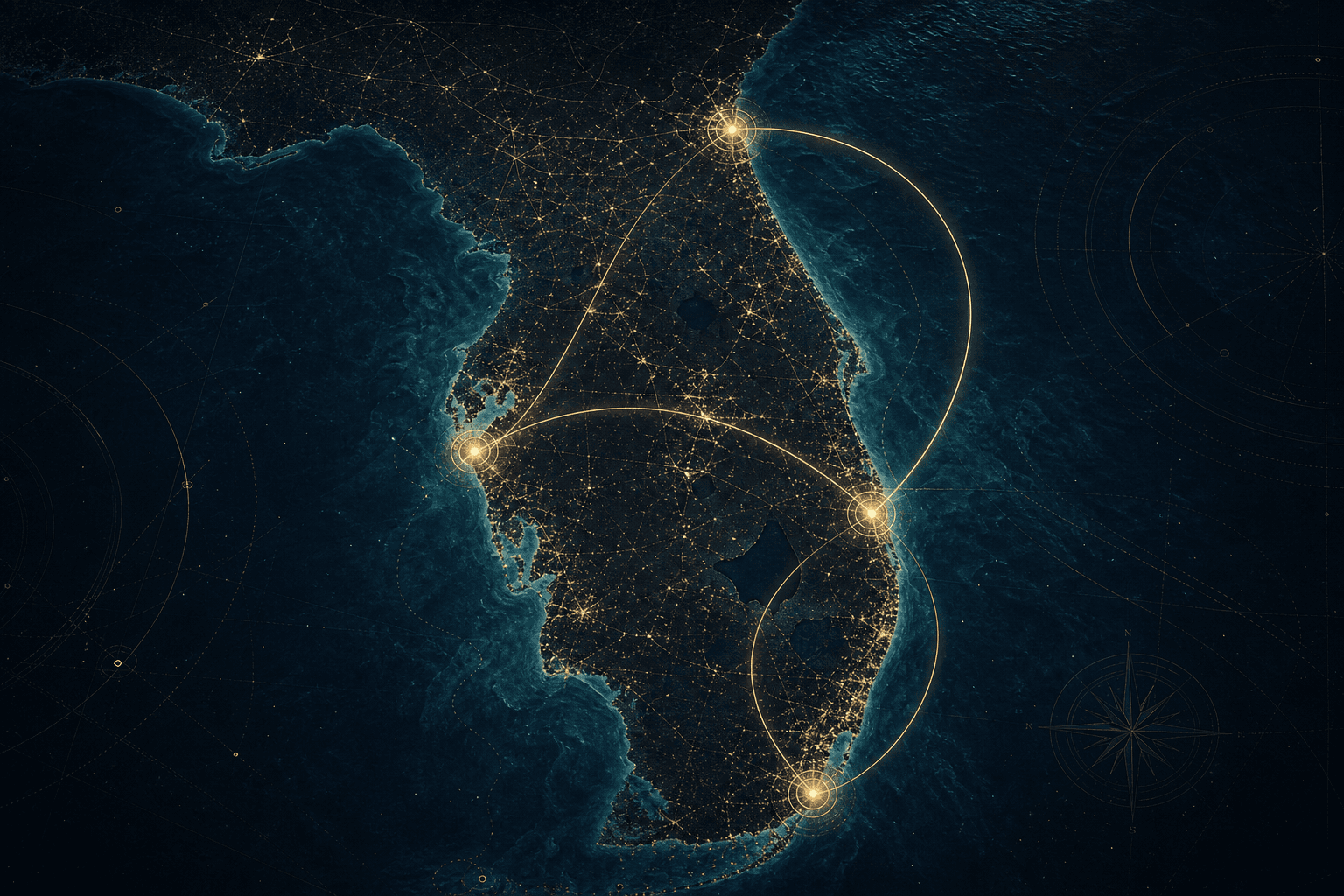
Port Canaveral benefits from proximity to Kennedy Space Center and family-focused itineraries. My direct experience securing Amazon and Blue Origin principals in that corridor informs how we approach arrivals and departures there. The environment is more controlled than urban ports. PortMiami handles heavy international traffic with dense urban surroundings. Complex road access requires precise timing and secure transportation coordination. Port Tampa Bay sits inside a working industrial harbor with longer access roads, fewer chokepoints, but unusual line-of-sight angles from adjacent properties. JAXPORT carries the lightest cruise volume of the four, which simplifies movement but reduces the protective cover that crowd density sometimes provides.
How Does Cruise Protection Differ from Yacht and Private Maritime Security?
Cruise ships and private yachts are very different operating environments with separate protocols, crew structures, and control over access. Yachts allow small teams, direct coordination with the captain, and control over who boards and when. Praetorian's yacht work can include standing watches, gangway control support, and direct integration into vessel operations. Cruise ships do not allow any of that. We adapt the model to the environment, not the other way around.
When Is Private Cruise Ship Security Warranted and When Is It Overkill?
Private protection is justified when risk profile, visibility, or custody considerations exceed what cruise security covers.
When Private Cruise Protection Is Warranted
Known Threats or Stalking
Documented threats, prior incidents, or an active stalking pattern naming the principal.
Custody or Divorce Conflict
Contested custody, recent separation, or court orders that the other party has tested.
Public Profile or Media Exposure
Recent press coverage, large social media presence, or a face that is recognizable in airports.
Sensitive Corporate Role
Public company executive, defense contractor, founder, or senior government official.
Recent Layoffs or Labor Conflict
Executives managing recent reductions in force or contentious labor situations.
Pre-IPO or Material Event Travel
Travel windows surrounding earnings, deal announcements, or other market-moving events.
Cruise line security alone is often sufficient for low-profile families with no specific threats, standard itineraries, and strong corporate travel policies already in place. The point of this article is not to sell protection to families who do not need it. The point is to make sure families who do need it can recognize the gap.
How Does Praetorian Plan and Execute a Protected Cruise?
Praetorian handles full-spectrum planning: before, during, and after the cruise, from Florida home or hotel to final return.
Pre-cruise planning. Itinerary review, port research, threat intelligence, coordination with corporate security where applicable, and selection of cabins, dining options, and embarkation timing that reduce exposure. We identify choke points before you encounter them.
Embarkation. Discreet arrival timing, secure transport coordination, baggage oversight, and early reconnaissance of terminal layouts. We are inside the terminal before you are, and we control the curb-to-stateroom window.
Onboard posture. Low-profile coverage with flexible distance from principals, monitoring of social spaces, and coordination with ship security only when operationally necessary. We sail as paying passengers, not as a visible detail.
Shore excursions. Custom routes, vetted private guides or vehicles where possible, contingency plans to abort or modify movements, and pre-positioned secondary contacts at each port.
Debarkation and hand-off. Controlled exit timing, secure ground transportation, and a clean hand-off to whatever protection picture follows, whether that is a return home, a yacht charter, or a villa stay.
What Role Do Digital Threats and Privacy Play in Cruise Ship Security?
Digital exposure now drives many physical risks at sea. Geotagged posts, unsecured ship Wi-Fi, and loyalty app data can reveal location to anyone looking. Praetorian advises on device use, delayed social media posting, and minimizing location tags during travel. The classic mistake is the principal posting a sunset photo from a stateroom balcony at 9 p.m. The metadata, the visible ship details, and the timestamp give a competent attacker the ship name, the cabin side, and a tracking window.
How Does Cruise Security Connect to Broader Home and Travel Protection Plans?
A cruise is only one chapter. Serious clients need continuity across home, travel, and digital environments. A cruise trip may coincide with an empty primary residence. Some families pair cruise protection with residential security for family members who stay behind.
Praetorian integrates with corporate travel programs, existing executive drivers, and family office risk frameworks. Our teams hand off between ground-based travel security, shipboard details, and yacht or villa protection without loss of situational awareness.
Continuity Across Home, Travel, and Digital
Residential and Family Protection
Coverage for the home and the family members who stay behind while the principal is at sea.
Event and Travel Security
Travel risk briefs, advance work, and on-trip coverage aligned with ISO 31030 travel risk standards.
Secure Transportation
Vetted ground transport between airport, hotel, terminal, and home for the full embarkation arc.
Digital Threat Protection
OPSEC review, data broker removal, and digital exposure reduction before and during travel.
Corporate Duty of Care
Documented executive protection programs aligned with K&R policies and ISO 31030 for corporate travel.
Hurricane Protection
Pre-storm planning and stand-behind residential coverage during the FL cruise hurricane season window.
- Cruise ship security is built for the vessel and the population, not for individuals.
- Embarkation, debarkation, and shore excursions are the windows where ship security does not own the threat surface.
- Private cruise protection embarks as paying passengers and operates through planning, positioning, and discretion, not visible hardware.
- Florida port selection materially changes the security plan, especially at Canaveral and PortMiami.
- Digital OPSEC during a cruise is now part of physical security. Delay posts, kill location services, use a VPN.
- Plan four to eight weeks ahead for typical itineraries. Complex multi-leg trips need several months.
Frequently Asked Questions
For low-profile travelers with no known threats, cruise ship security is often sufficient. Population-level security covers most standard situations effectively. Once stalking concerns, custody disputes, high media visibility, or recent threats enter the picture, private executive protection services should be considered.
Private protection details usually embark as paying passengers, subject to the same rules as any guest. Weapons are generally prohibited on international ships. Effective private details operate through planning, positioning, and communication, not visible hardware.
Cruise ship security can respond to immediate incidents and enforce ship rules. They are not structured to manage ongoing stalking cases or custody orders. Those situations require pre-trip documentation, coordination with legal counsel, and a dedicated protection team monitoring for specific individuals.
Plan 4-8 weeks before sailing for typical Caribbean or Mediterranean cruises. This allows itinerary analysis and coordination with the cruise line company. High-profile or complex itineraries, large family groups, or multi-leg trips including villas or yachts may need several months.
Praetorian details use casual clothing, family-friendly behavior patterns, and natural spacing to blend with regular passengers. Techniques include rotating positions, avoiding clustering around the principal, and using prearranged signals instead of obvious radio traffic.
References
Planning a Cruise That Needs More Than Ship Security?
Praetorian builds the protection layer around the cruise, before you sail and after you debark. Confidential intake, itinerary-specific planning, and operators who sail as paying passengers.
Schedule a Confidential ConsultationWhere to Read Next
Cruise Protection Service
The dedicated Praetorian service this article supports. Coverage detail, port specifics, and engagement model.
Corporate Duty of Care Solution
If you are scoping a documented EP program for executive travel, start here.
Maritime and Yacht Security
How protection adapts when the vessel is private rather than commercial.
About Christopher Smith
Founder background: USMC, state law enforcement, and corporate executive protection at Kennedy Space Center.