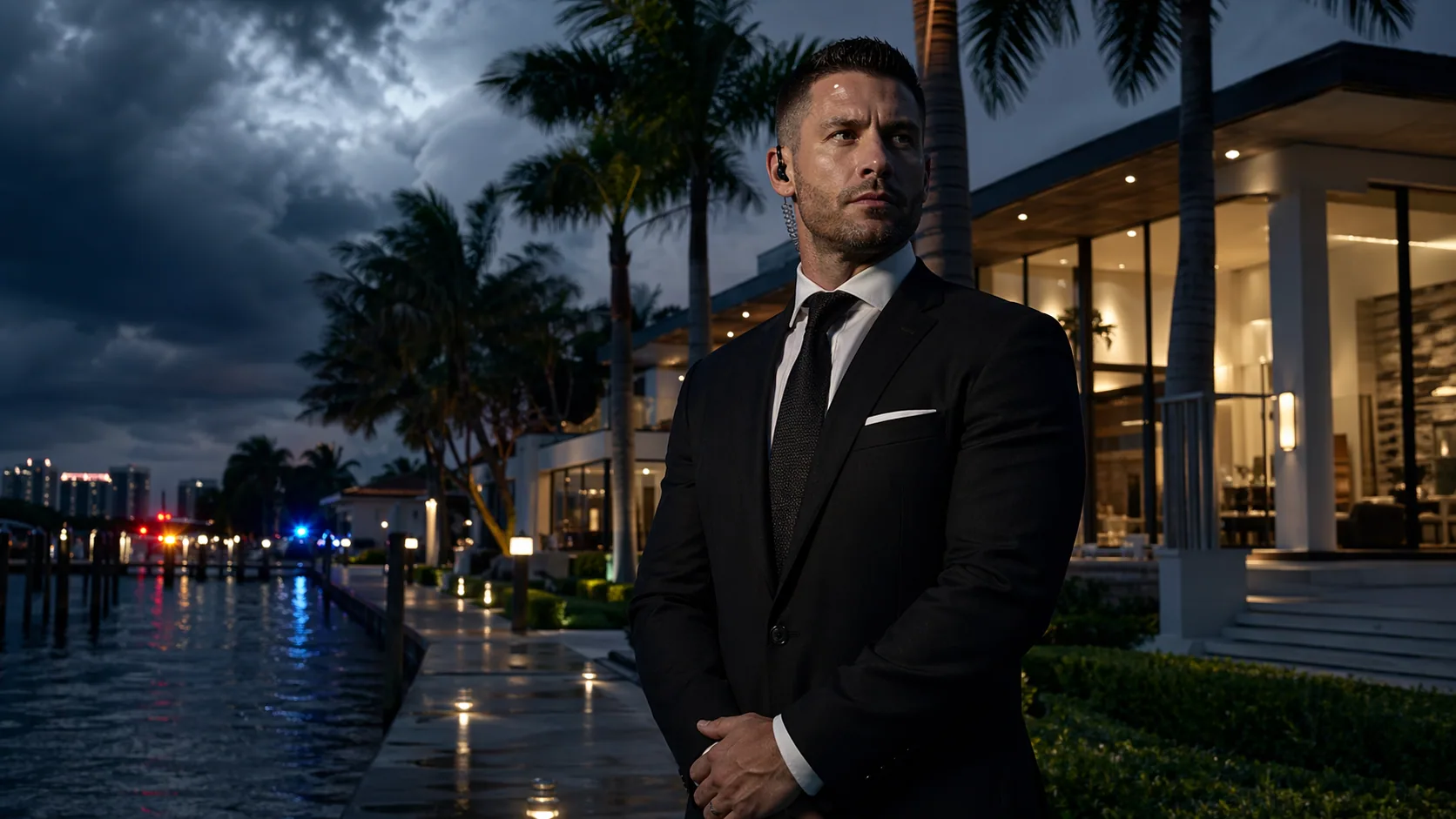
- Aerospace executives on Florida's Space Coast face elevated risk from predictable launch calendars, foreign intelligence targeting, activist activity, and digital exposure that escalates into physical threats.
- Praetorian delivers discreet executive protection and protective intelligence tailored to this profile.
Table of Contents
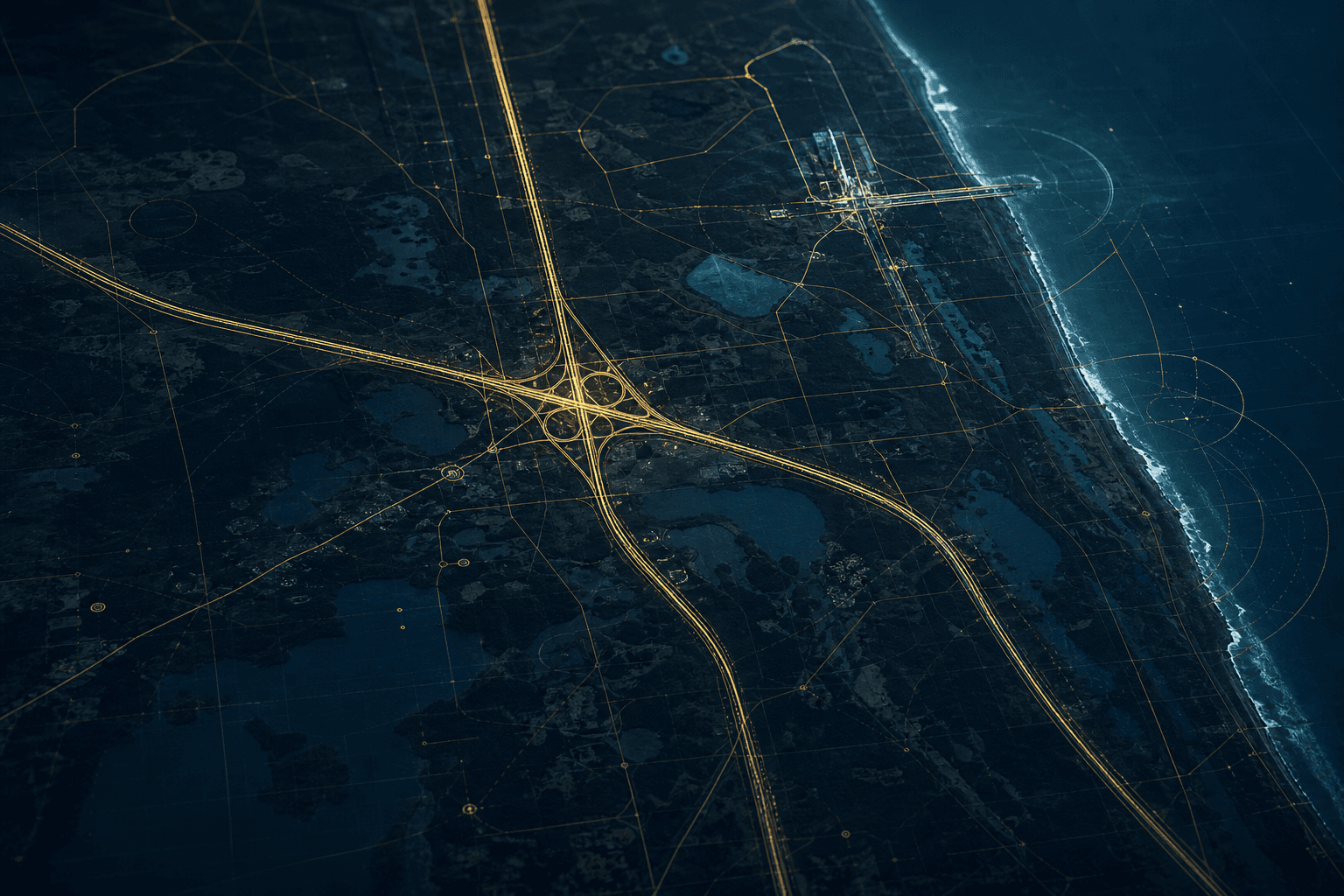
Aerospace leaders face threats that most corporate executives never encounter. Launch schedules are public. Foreign adversaries have persistent interest in space and defense programs. Every major milestone brings media attention, crowds, and exposure. The Space Coast concentrates this picture inside a 30-mile stretch of coastline where Kennedy Space Center, Cape Canaveral Space Force Station, Patrick Space Force Base, and Port Canaveral sit on top of each other.
That concentration is what makes the geography both operationally efficient and a security challenge. Coverage that works for a Manhattan-based executive does not transfer cleanly to a principal whose week revolves around a launch pad.
TL;DR: Why do aerospace executives on the Space Coast need executive protection?
Aerospace executives on Florida's Space Coast face elevated risk. Predictable launch calendars expose travel patterns. Foreign intelligence services actively target U.S. technology and aerospace firms. Activist groups organize around launches. Digital exposure reveals personal details that become physical vulnerabilities. Praetorian Executive Protection LLC, headquartered in Cocoa, Florida, delivers discreet executive protection services and protective intelligence built for this threat profile.
What makes aerospace executive security different on Florida's Space Coast?
The geographic anchor points matter. Within a 30-mile stretch, you have NASA operations, Space Force assets, commercial launch providers, satellite integration facilities, and a deep-water port handling sensitive cargo. The same corridor that makes operations efficient creates a concentration of high-value targets.
What Makes Space Coast EP Different
Predictable Schedules
Launch windows are public weeks or months in advance. The principal's travel pattern is on the calendar.
Federal Coexistence
Operations sit alongside NASA, Space Force, Port Canaveral, and FBI presence. Coordination is non-negotiable.
Foreign Intelligence Interest
ODNI and FBI have publicly named aerospace as a primary foreign collection target for the last decade.
Activist Pressure
Launches involving defense payloads or environmental concerns draw organized protest activity at predictable times.
How do public launch schedules create exposure?
Predictable launch schedules create predictable patterns. When Artemis II drew an estimated 400,000 visitors to Brevard County, the strain on roads, hotels, and law enforcement was significant. Executives moving through that environment face exposure that does not exist during routine business travel. Adversaries know when executives will travel to the region, when they will be on-site, and roughly when they will depart. That window is enough to support surveillance, pre-positioning, or targeting.
What media and crowd exposure risks exist?
In July 2024, the Office of the Director of National Intelligence (ODNI), the National Counterintelligence and Security Center (NCSC), the Air Force Office of Special Investigations, and NCIS jointly issued a bulletin warning U.S. emerging technology firms about foreign investment used as cover for espionage operations. Aerospace is explicitly included. The FBI's Counterintelligence division confirms that aerospace firms remain prime targets for both cyber and human intelligence collection.
Advanced designs, military specifications, and satellite communication protocols are targets for state-aligned threat actors seeking technical advantages. The executives who hold that knowledge are themselves the target surface. Praetorian operates from Cocoa, Florida, providing low-visibility security services for executives, program managers, and technical leaders across the Space Coast.
How does Christopher Smith's Kennedy Space Center experience shape our approach?
Praetorian Executive Protection LLC was founded by Christopher Smith, who brings more than 30 years of experience across the United States Marine Corps, state law enforcement, and corporate executive protection. The most directly relevant credential is the work that came before founding the firm.
Smith built and led personal security for Jeff Bezos and the Amazon Board of Directors at Kennedy Space Center during Project Kuiper launch operations. This included site security development, launch-day movement planning, and coordination with Space Force, NASA, and commercial security entities.
““My work protecting Fortune 100 leadership at Kennedy Space Center taught me that aerospace executive protection demands a different operational tempo. You plan around launch windows, coordinate with multiple federal agencies, and maintain discretion in an environment where cameras are everywhere.
Christopher SmithFounder, Praetorian Executive Protection
What worked for a Fortune 100 technology company translates directly into practical programs for other aerospace executives and contractors operating in the region. The principles remain consistent: advance work, protective intelligence, discreet movement, and seamless protection that does not disrupt operations. Launch-day movements require precise timing and route options. Secure transport into and out of KSC must account for traffic surges, checkpoint procedures, and public visibility. Coordination with government security at Space Force and NASA facilities requires established relationships and professional conduct.
What are the primary threats facing aerospace executives and families?
The threat categories are clear, and each requires different mitigation strategies. Bundling them under "executive protection" without segmenting the work is how programs miss the threats that actually matter.
Four Primary Threat Categories
Foreign Intelligence
Online recruitment, social media profiling, front-company outreach. Aerospace IP and engineering talent are documented collection priorities.
Activist Confrontation
Defense payload protests, environmental groups, and coordinated media-facing demonstrations timed to launches.
Opportunistic Crime
Hotel theft, vehicle break-ins, and crowd-environment crime spiking during major launch windows.
Digital-To-Physical
LinkedIn, media interviews, real estate records, and family social media that supply physical targeting intelligence.
How do predictable launch schedules create exposure?
Launch dates are public weeks or months in advance. Adversaries know when executives will travel to the region, when they will be on-site, and roughly when they will depart. This predictability allows surveillance, pre-positioning, or targeting that would be difficult against executives with random schedules.
What foreign intelligence targeting occurs?
The FBI and ODNI have issued repeated warnings about foreign services targeting aerospace intellectual property, engineers, and executives. These efforts include online recruitment, social media profiling, and use of front companies for intelligence collection. A 2025 Army intelligence memo warned of foreign recruitment operations using fake companies and consulting offers to collect sensitive information.
How does activist and protest activity create risk?
Launches involving defense payloads or environmental concerns draw organized protest activity. During high-profile launches, this can include attempts to confront executives, disrupt transport, or create confrontational scenes for media consumption. Families may be caught in spillover activity near hotels or public venues.
How does digital exposure become physical risk?
LinkedIn profiles reveal job titles, project associations, and conference appearances. Media interviews announce travel plans. Children's school announcements, real estate records, and spouse social media accounts can expose residential locations and daily routines. This information supports targeting by adversaries, activists, or opportunistic criminals. Effective executive protection includes ongoing protective intelligence, not bodyguards deployed only on launch day.
How does protective intelligence support aerospace executive protection?
Protective intelligence is the systematic collection and analysis of information about potential threats to an individual, organization, or event. For aerospace executives, this goes far beyond checking news headlines and requires specialized knowledge to identify and mitigate complex threats.
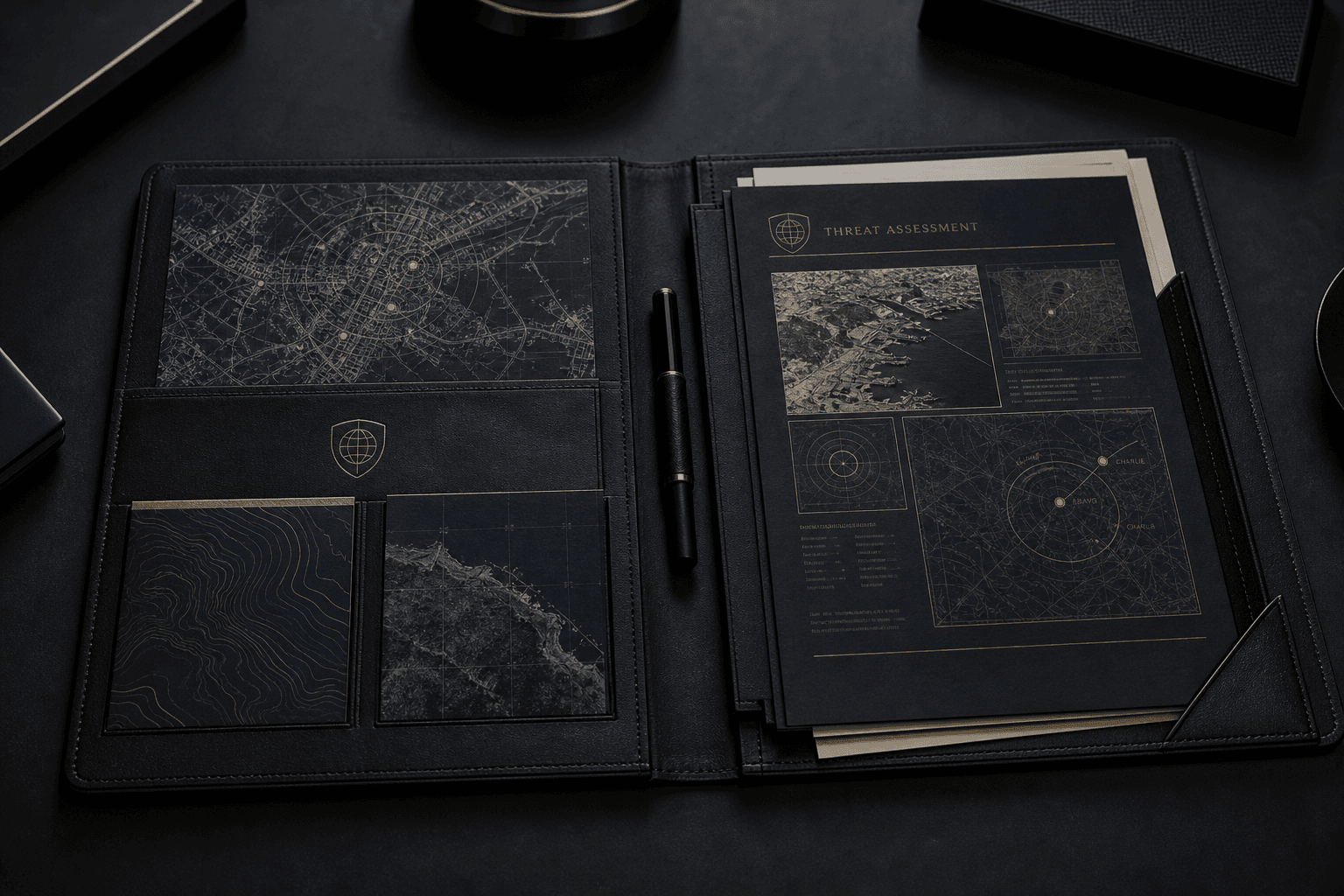
For aerospace personnel, protective intelligence must track launch calendars, contractor movements, foreign media coverage of U.S. space programs, activist group organizing, and dark-web chatter targeting space industry personnel. It must detect credible threats weeks before a launch event, allowing for posture adjustments rather than reactive crisis management. It uses advance work and route studies to identify risks before an executive arrives at KSC, Cape Canaveral, or Patrick SFB. It integrates with digital threat protection for executives with heavy online presence, addressing doxxing defense and social engineering risks.
This intelligence layer shapes everything downstream: residential security posture, secure transportation routes, and travel security planning for both executives and families.
Related Protection Services
Protective Intelligence
Ongoing threat monitoring and OSINT collection specific to aerospace personnel and launch operations.
Residential and Family Protection
Home and family coverage at the residence address, closing the gap corporate security cannot reach.
Secure Transportation
Vetted ground transport between aircraft, KSC checkpoints, hotels, and residences during launch windows.
Executive Protection
Close protection for chief executives, board members, and technical leaders moving through the Space Coast corridor.
Aerospace & KSC Protection
Dedicated programs for KSC site builds, contractor logistics, and launch support.
How do we secure executives in business aviation and launch-related travel?
Aerospace executives often move via business aviation, charter, and mixed commercial travel tied to launch operations, test events, and investor meetings. Each movement creates exposure that requires mitigation.
Flight department coordination. Pre-arrival coordination with FBOs at Orlando International, Melbourne, and local Space Coast airfields. The principal's tail number, expected arrival time, and ground transport plan are confirmed before wheels-up.
Secure arrival procedures. Vetted ground transport waiting at the aircraft. Departure protocols that minimize public exposure on the ramp. Communications established with flight crews and ground teams.
Movement to KSC or Cape Canaveral. Route selection that accounts for checkpoint procedures, traffic surges, and predictable congestion windows during major launches.
On-site coverage. Discreet protection through site visits, VIP viewing areas, and any media interactions. Coordination with internal corporate security and government security on protocols.
Departure and return. Reverse of the arrival sequence, with departure timing tuned to avoid the public-exposure window most launches create at gate and FBO.
Major launch providers and aerospace primes already invest heavily in business aviation security for their leadership. Praetorian brings that same discipline to other aerospace executives and contractors who need comparable protection without building internal capability.
How do residential and family security close the aerospace risk gap?
Many aerospace corporations secure their facilities and launch sites with significant resources. They invest in perimeter security, access control, and credentialed entry. Yet they leave a gap at the executive's home and during daily family routines. This is consistently the softest point in the threat picture.

Praetorian designs residential security programs for Space Coast and Orlando area homes. This includes physical security assessment, access control improvements, and low-visibility patrols that do not advertise a security presence to neighbors or observers.
Family members can be easier targets for pressure, surveillance, or extortion related to aerospace programs. A spouse's social media might reveal travel patterns. A teenager's posts might identify the family home. These soft points are precisely where adversaries probe. Integration includes secure transportation for school runs and activities, coordination with residential staff, and periodic threat assessment updates around major launches or program milestones.
One lesson from my Kennedy Space Center experience: adversaries often probe the softest point, which is usually far from the secure perimeter of any space facility. What happens at home matters as much as what happens on-site.
How do Praetorian's services support corporate duty of care?
Aerospace firms carry a clear duty of care for key executives and technical leaders. This obligation extends beyond facility security to encompass travel, residential exposure, and family protection. Standards like ISO 31030 for travel risk management increasingly define what reasonable care looks like, and corporate boards now ask documentation questions earlier in the budget cycle.
Praetorian builds discreet close protection details that align with corporate policies, HR requirements, and legal guidelines. Maintaining executive confidentiality is essential, particularly under federal compliance frameworks such as ITAR, CMMC, and NIST standards.
The corporate duty of care program addresses launch events, labor issues, and workplace violence concerns specific to aerospace operations. Integration with internal corporate security teams is essential. Praetorian does not replace in-house security. We support on the ground, provide intelligence the internal team cannot easily collect, and cover residential settings where corporate assets cannot deploy.
How do we coordinate with law enforcement and federal partners without creating friction?
Effective aerospace executive protection must complement, not compete with, law enforcement and federal security. Around KSC and Cape Canaveral, multiple agencies have jurisdiction and responsibilities. Friction creates problems for everyone.
My state law enforcement experience and established relationships across Florida enable smooth coordination. When a principal moves through areas with active Space Force, NASA, or Port Canaveral security presence, advance notification and deconfliction prevent misunderstandings. Notification protocols, route coordination, and incident reporting are handled with local law enforcement, Port Canaveral security, and federal partners when circumstances require.
The standard is discretion: no lights-and-sirens footprint, no disruption to NASA or Space Force operations, and no actions that draw unnecessary attention to the principal or complicate launch provider security. This coordination becomes critical during protests, credible threats, or large VIP launch events where multiple agencies are present.
When should I plan executive protection for a launch event?
The longer the lead time, the better the program. Two to four weeks is a workable minimum. Earlier is better when the threat picture justifies it.
Lead Time Guidance
Routine Launch
2-3 weeks lead time. Advance work, route assessment, ground transport vetting, FBO coordination.
High-Profile Launch
4-6 weeks lead time. Adds activist organizing review, foreign media monitoring, and protest contingency planning.
Sustained Program
Ongoing engagement. Continuous protective intelligence, quarterly residential assessment, and surge coverage around scheduled events.
Some clients need surge coverage during launch periods. Others require ongoing full-time details. Praetorian's protection programs scale from targeted launch-event support to comprehensive year-round protection.
How does Praetorian compare to generic security services for aerospace leaders?
Not all security providers understand the specific demands of launch operations, offshore recovery, or high-profile technology projects. Generic corporate executive protection works fine in predictable urban environments. Aerospace presents different challenges.
Aerospace-Specific EP vs. Generic Corporate EP
- +KSC and Cape Canaveral operational experience, including Project Kuiper launch detail
- +Established coordination relationships with NASA, Space Force, and Port Canaveral security
- +Florida-resident operators on the Space Coast, not flown-in coverage that needs orientation
- +Protective intelligence tuned to aerospace threat actors, not just generic corporate threat feeds
- -Smaller scale than national EP firms; this is depth, not volume, and that is the deliberate trade-off
- -Focus is Florida-anchored; international coverage is provided through partner networks, not direct deployment
- -Confidentiality posture means no client logos, testimonials, or case studies for prospective clients to review
- -Engagement model is consultation-first; same-day surge coverage is possible but not the default
Questions to ask any provider include: have you worked on Space Coast launch operations? What is your experience coordinating with NASA, Space Force, or commercial launch security? How do you handle protective intelligence for aerospace personnel? What is your approach to business aviation security? Praetorian focuses on a limited client base for depth and confidentiality. This is not high-volume guard rotation.
How does aerospace executive security intersect with cyber and digital threat protection?
Many aerospace threats begin online. Phishing campaigns, doxxing, deep-dive social media research, and open-source collection on executives precede physical targeting. The cybersecurity landscape for aerospace executives in 2026 is shaped by state-sponsored cyber espionage and complex supply chain vulnerabilities.
Praetorian's digital threat protection and protective intelligence teams monitor for exposure of home addresses, children's schools, and travel plans. Conference agendas, LinkedIn posts, and media interviews can reveal high-value information if not managed with security in mind. Aerospace ecosystems rely on globally distributed networks of contractors, making them vulnerable to hacking through less-secure third-party vendors, which extends the principal's exposure beyond their own direct digital footprint.
Online findings feed directly into physical executive protection decisions, residential security measures, and changes to travel security planning. Monitoring intensifies during major launches, IPOs, mergers, or controversial payloads that increase online hostility.
How do we work with family offices, risk managers, and corporate security directors?
Most aerospace executive security decisions involve multiple stakeholders. Corporate security has operational concerns. HR has compliance requirements. Legal wants liability protection. Family offices managing multi-generational wealth have their own priorities.
The process begins by aligning expectations, authorities, and reporting lines before any detail deploys. Who receives threat intelligence updates? Who authorizes changes to residential security? Who is the point of contact during travel? These questions get answered before operations begin. Protective intelligence findings are shared with internal teams in a structured, non-alarmist way that supports broader risk management. The family office security program addresses how we support multi-generational aerospace wealth and holdings.
- Public launch schedules are a security problem, not just a logistics problem. The principal's travel pattern is on the calendar.
- Foreign intelligence interest in U.S. aerospace is documented and persistent. ODNI, NCSC, and FBI advisories name it explicitly.
- The residential address and the family schedule are where most aerospace EP programs fail.
- Coordination with NASA, Space Force, and Port Canaveral is non-negotiable. Friction creates incidents.
- Protective intelligence is an ongoing function, not a launch-week briefing.
- Plan two to four weeks ahead for routine launches; longer for high-profile or controversial payloads.
References
Frequently Asked Questions
Foreign intelligence services actively target U.S. aerospace firms for technology theft and insider recruitment. Activist groups organize around launches involving defense payloads or environmental concerns. Predictable launch schedules create patterns that adversaries can exploit for surveillance or targeting.
Yes. Founder Christopher Smith built and led personal security for Jeff Bezos and the Amazon Board of Directors at Kennedy Space Center during Project Kuiper launch operations, including site security development and coordination with Space Force and NASA.
Protective intelligence involves systematic collection and analysis of threat information. For aerospace personnel, this includes monitoring launch calendars, foreign media coverage, activist organizing, dark-web activity, and open-source intelligence about potential threats.
Request protection services at least two to four weeks before a launch event. This allows time for advance work, route assessment, coordination with relevant agencies, and protective intelligence collection on emerging threats.
Yes. Praetorian integrates with internal corporate security rather than replacing it. We handle ground-level protection, protective intelligence, and residential coverage while coordinating reporting and threat information sharing with your team.
Ready to Discuss Aerospace Executive Protection?
Praetorian builds the Space Coast EP layer that supplements internal corporate security. Launch-event surge or sustained year-round programs. Confidential intake, structured threat assessment, and Florida-resident operators.
Schedule a Confidential ConsultationWhere to Read Next
Corporate Duty of Care Solution
Documented EP programs aligned with ISO 31030, the OSHA General Duty Clause, and K&R underwriter expectations.
Space Coast Service Area
Local coverage detail for the corridor from Titusville through Cape Canaveral down to Melbourne and Palm Bay.
About Christopher Smith
Founder background: USMC, state law enforcement, and corporate executive protection at Kennedy Space Center.
Executive Protection Glossary
Practitioner definitions of advance work, OPSEC, protective intelligence, and other terms referenced throughout this article.